
Writing a Theoretical City in Samuel R. Delany's Atlantis Model 1924
How do you know you're home if home never existed and never knew your name?
Atlantis Model: 1924 charts the journey of a young Black man as he moves from North Carolina to New York in the 1920s in Samuel R. Delany’s imaginative and experimental novella from his collection Atlantis.
Writing Skins is a reader supported author newsletter that shares excerpts from an award nominated speculative fiction writer’s craft journals. It offers a vulnerable, funny, and interesting look at the writing life, craft, and storytelling. Craft Chat is the writing craft section of the newsletter where readers can find essays around the writing craft.
I’ve written about Delany a little before on this newsletter (Jewels of Aptor and Babel 17). While I am a fan of Delany’s writing and deeply grateful for the work he’s published that has pushed Black narratives and Black queer narratives further, I sometimes can find his stories a bit too theoretical and philosophical.
In my early writing years, I loved this style of writing that was less about people and the events of their lives that shaped them, but was more about the idea. But as I’ve written and read more, these types of stories often feel overly dense and obfuscatory for no reason other than in service of a writer’s big cool idea.
And for me as a reader, that is pretty boring.
Despite how boring those stories are to me, I do sometimes find the ideas being explored thought provoking, like that in Delany’s Atlantis Model: 1924.
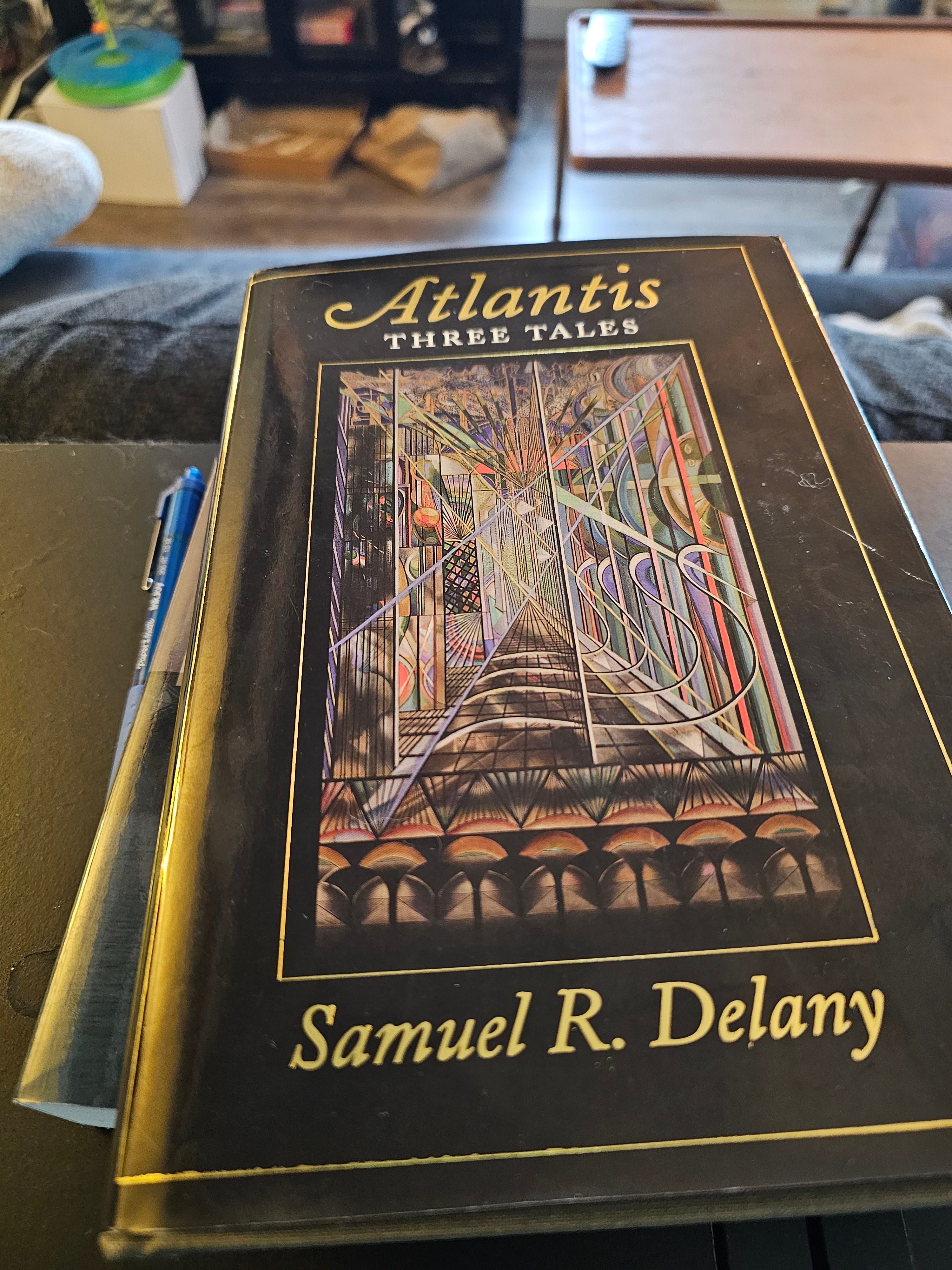
Atlantis Model: 1924 is a short novella, maybe even novelette, in the collection Atlantis that opens with a quote from Robert Hayden’s poem Middle Passage on the West Atlantic slave trade:
Shuttles in the rocking loom of history,
the dark ships move, the dark ships move
Then the novel falls into the story of Sam—not to be confused with the author—as he makes his way from South Carolina to Harlem during the 1920s at the beginning of the Great Migration when many Black people made the journey from the South to northern states in order to escape harsh bigotry and find better lives.
One of the opening scenes places Sam on a segregated train car for the journey to New York and ends around a conversation on Black identity about who gets to name Black folk and what it means for a Black person to identify themselves by their own means. Various scenes throughout the novel deal with topics of race, Prohibition, queerness, and community. All of those topics and themes are interesting (though at times boring to read), but the most interesting aspect of the novel is not what it is written about but how it is written.
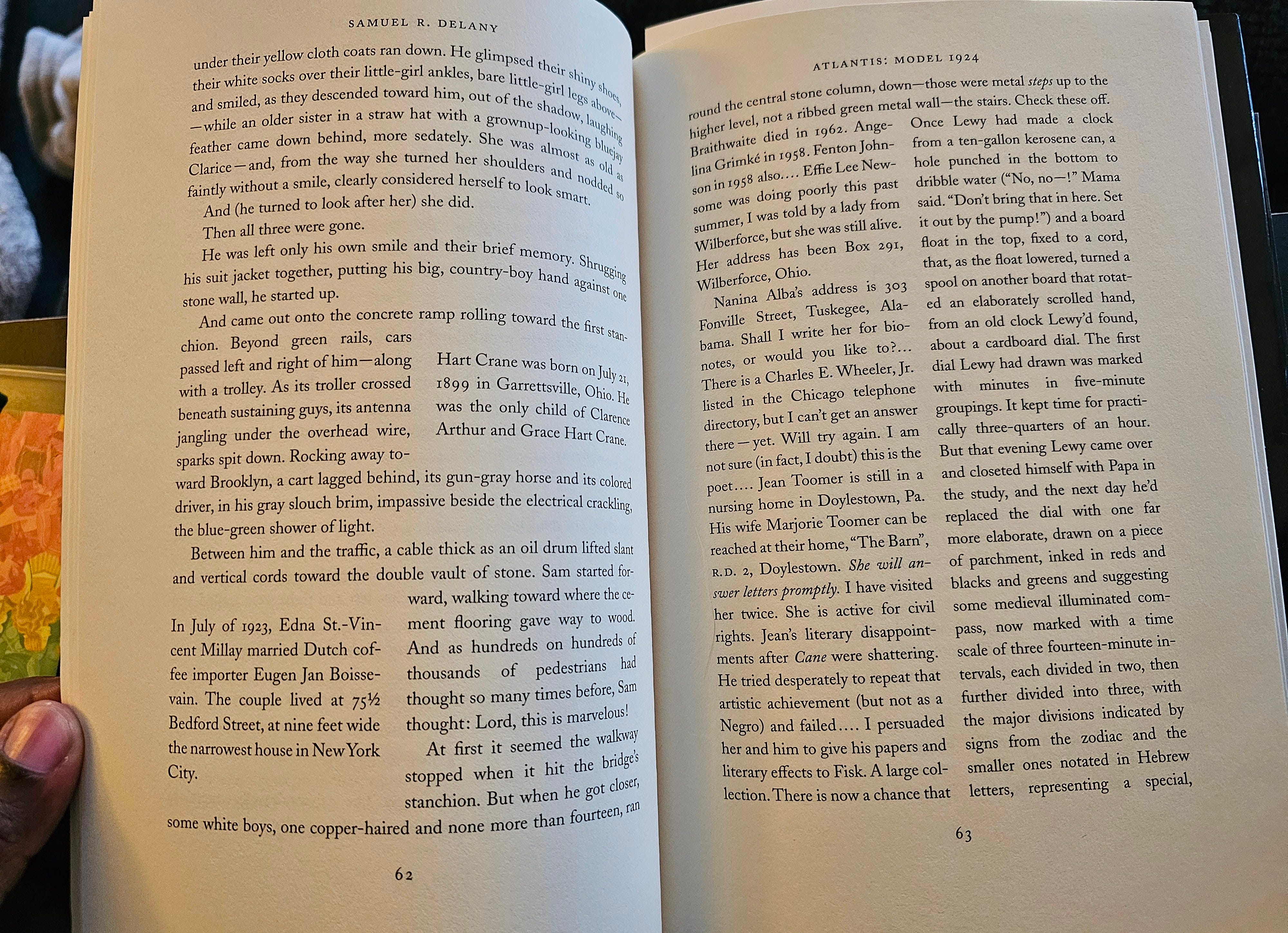
The novel is written in a stylized format that splits the text into columns and asides that create a different story than the main one about Sam. It took a few times encountering the structure to get into the style. At first, I struggled with how to read the story and what part was the one that logically followed before the break in structure. By the end of the story, I did it by what felt right.
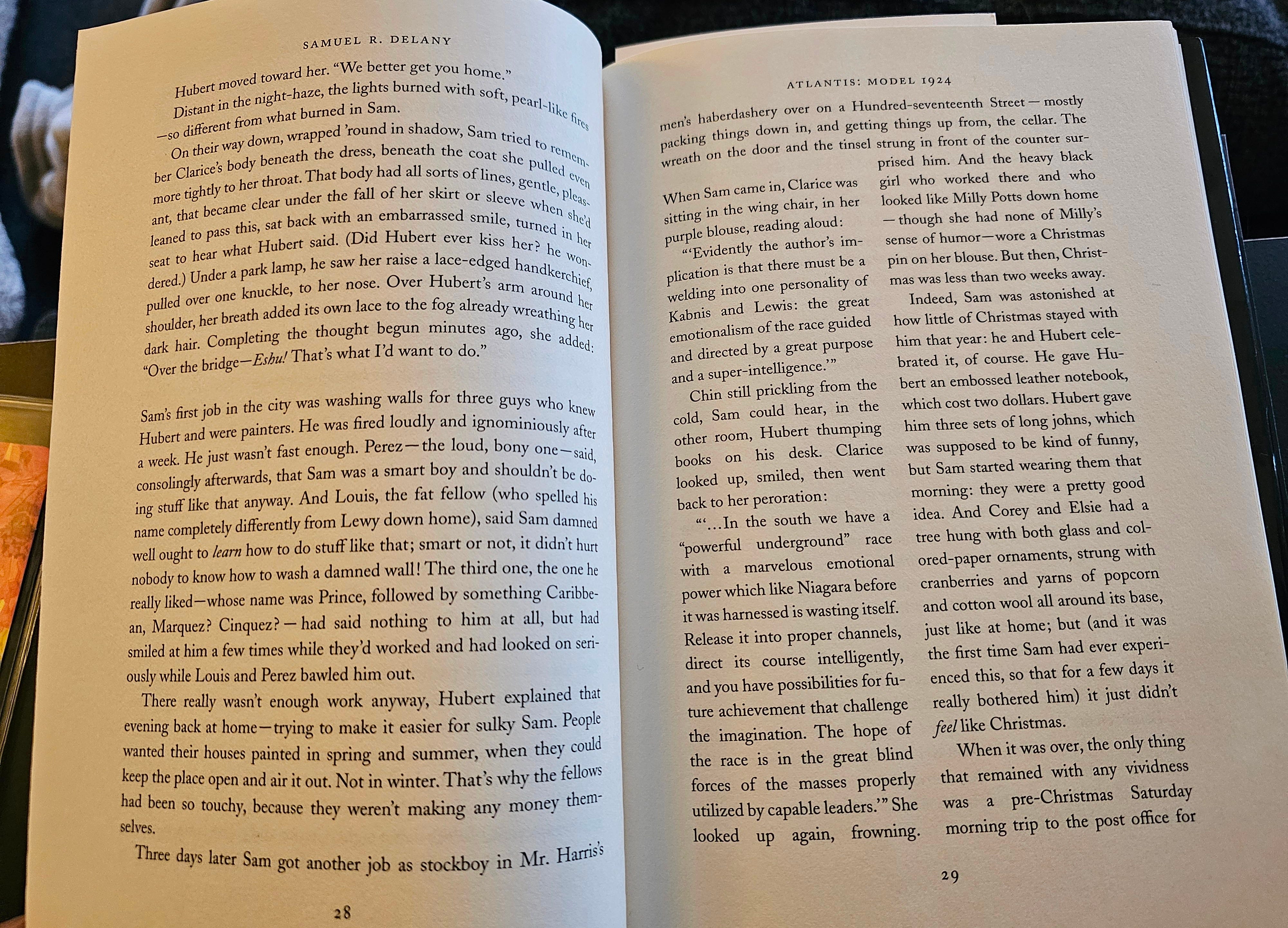
Some of the asides were related to New York City history and culture. And sometimes the structure reminded me of the city’s structure and popular architecture of New York—of towers and bridges and spaces between buildings. In a few spots, the split in narrative read like footnotes or author commentary on the city.


The story itself was inspired by a story Delany heard from his father about getting to New York as a young Black man and being disappointed that there weren’t any sky scrapers he could see. Supposedly, Delany’s father remarked that New York was no better than where he came from.
It was no Atlantis. No magical fantastical island city ripped out of the future.

The whole story, though following Sam, read more like it was following the idea of what a city like New York meant to the Black people from the south who sought the city out as a refuge. Two major conversations, for me, marked the book’s themes and were the most thought provoking. One happened during the middle of the book while Sam was walking across the Brooklyn Bridge. Sam encountered a man who told him of an Atlantis that was a safe, heavenly place and only accessible by certain magical people—read: queer. The other happens at the end of the book and is a conversation in identifying as a Black person. What is better, allowing the world to label you or labeling yourself?
Each conversation revolves around place and how it relates to identity. Each conversation returns to that opening poem by Hayden quoted. Each asking the same question without asking it.
Who are we in relation to where we come from?
One of the characters in Atlantis Model: 1924, rejects the idea of being labeled colored, African, or anything tied to the idea of where a Black person has come from or what the color of their skin means to who they are in the gaze of other people. Instead, he will identify himself by everything that he comes into contact with and touches him, whether that be people, places, or works of art.
At times throughout the story, the New York of the narrative is recreated as the magical city that can recreate a person’s identity, rewrite their past story into something magical and new. The story wrestles with the idea of a past unrooted to the land that people connect it to. Africa. Atlantis. All lands real but made fantastical by history. African Americans. A people real but made fantastical and othered by the cruel history inflicted on them.
There were some moments of excitement and interest while reading Atlantis Model: 1924, but a lot of it felt like more a mental exercise and less like a story that I wanted to really get into, but that could also have been because I primarily read the story at night after long days creatively taxing my brain.
If you haven’t read any Delany, despite what I say about the denseness of his prose, he is a great writer and one everyone should read. He’s like a Black gay horny Le Guin with mind numbing/blowing stories that blend science fiction with fantasy and tackles topics like queerness, race, language, and monogamy in many of his works.
Thanks for reading! If you’ve read Atlantis or Atlantis Model: 1924, I would really like to know your thoughts. Besides reading, how has life been for you? I am coming up on my self-imposed deadline for finishing the second draft of my novel and really considering crawling into a cave from now until after I finish the novel.
If you don’t hear from me for a few days or weeks, you’ll know why.