
The Philosophical Science Fiction of Samuel R. Delany’s Babel-17
How language shapes the science fiction of Babel-17.
Writing Skins is a reader supported author newsletter that shares excerpts from an award nominated speculative fiction writer’s craft journals. It offers a vulnerable, funny, and interesting look at the writing life, craft, and storytelling.
Craft Chat is the writing craft section of the newsletter where subscribers and me go through a subject, piece of media, or technique together.
Philosophical science fiction has been around since the first science fiction story, which is considered to be Mary Shelley’s Frankenstein. Some critics and readers believe that all science fiction is philosophical because it deals with thought experiments, whether it’s like Shelley’s novel about the ramifications of playing God or Samuel R. Delany’s works, which deal with a wide range of philosophical topics.
The philosophy in Delany’s Babel-17 is a linguistic one based around the Sapir-Whorf Hypothesis that asserts what language you speak determines how you think or how your brain perceives the world:
“We dissect nature along lines laid down by our native languages…the world is presented in a kaleidoscopic flux of impressions which has to be organized by our minds—and this means largely by the linguistic systems in our minds. We cut nature up, organize it into concepts, and ascribe significances as we do, largely because we are parties to an agreement to organize it in this way—an agreement that holds throughout our speech community and is codified in the patterns of our language.” (Benjamin Lee Whorf)
Whorf’s hypothesis has long been laughed out due to the face that he believed how Hopi used time in their language meant they didn’t understand time or perceived it in a different way. Hopi speakers do understand time in various ways. This hasn’t stopped linguists from wondering and believing that while, Whorf was wrong, language does have an impact in our culture.
In a study done in the late aughts on an Aboriginal language, Murrinhpatha, researchers found that speakers of the language process moments faster than other languages because they use one word to convey not just what happened but who did it. Since the culture that speaks Murrinhpatha is one based largely on community, conveying a message that captures the whole community is important to the way they speak and see the world.
Another way to think about this theory and the implications of language on thought, consider someone who grew up learning how to speak American English will have different thought patterns than someone who grew up speaking Canadian English or French or Chinese. Language influences thought, which in Babel-17’s case, leads to action. Throughout the book, many examples are given of how impactful and far-reaching living in a world where this hypothesis is true. One includes a character explaining that using one language would take people minutes to convey a meaning and hours in another language to convey the same meaning.
Babel-17 in the novel is a lost or galactic type language that most people in the novel don’t speak except for a warring race that uses the language in combat to cause harm. A poet and captain in the novel, Rydra Wong, sees the language of Babel-17 as something more than a violence. Wong sees it as the way into changing how people think about each other, the world, stretching understanding to new heights.
Delany’s characters use the philosophy and language of the novel to fight against oppression and pain in a way that puts language and the way we think at the crux of the problem in relating to one another. For example, there is a character in the novel, The Butcher, a character who once spoke Babel-17 but no longer remembers and does not use personal pronouns like ‘I’, ‘you’, and ‘we’. Wong, The Butcher’s captain, reminds The Butcher of who ‘I’ is and who ‘you’ are, creating an exchange that leads to one of self-discovery and vulnerability done in a poetic style where ‘you’ is ‘I’ and ‘me’ is ‘you’:
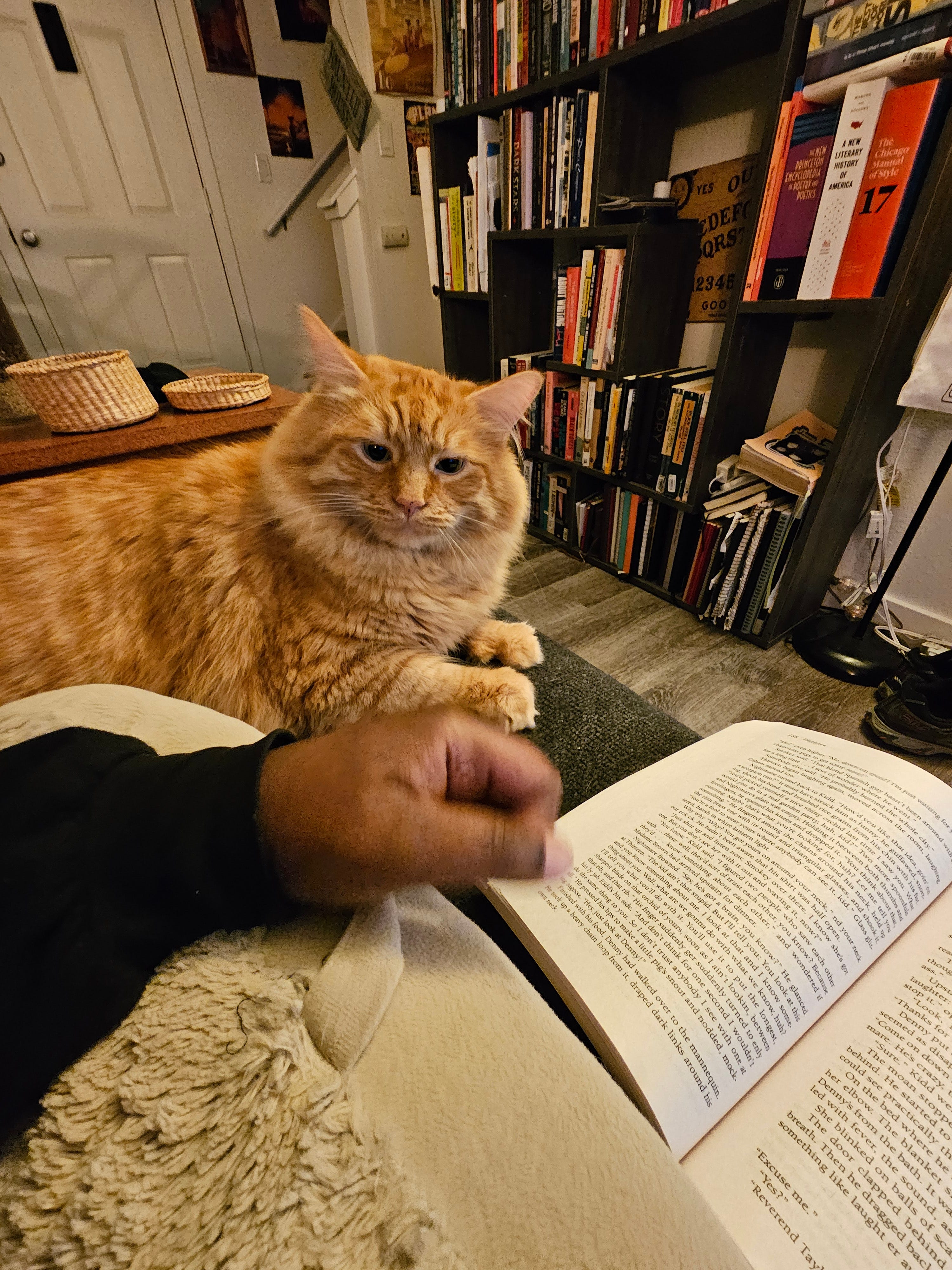
“‘Don’t you see, sometimes you want to say things, and you’re missing an idea to make them with, and missing a word to make the idea with. In the beginning was the word. That’s how somebody tried to explain it once. Until something is named, it doesn’t exist.’… [The Butcher] grunted once again. ‘But now you are not quite so alone. I teach you to understand the others, a little. You’re not stupid, and you learn fast…You like me.’ … ‘If you ever rob another bank, you will give me all the money.” Rydra laughed. ‘Why, thank you.’”
What the novel and theory makes readers think, is how does gender play out in cultures that speak Tagalog, Finnish, and Mandarin or other languages that use gender neutrality? What are the ramifications of learning and speaking only one language? Are we limiting ourselves in how we can think by not exploring different linguistic frameworks? According to Delany’s Babel-17, yes. Not only are we missing out on the ability to think in new and barrier-breaking ways by only speaking one language, but we’re also not gaining access to language we could use to describe ourselves and understand the world.
Many non-gendered languages do still use gendered terms like father, daughter, wife, husband, that stick closely to the binary. If we dig further into languages connected to Indigenous cultures more, than the understanding of gender is a bit more freeing and the ideas of self and other are less strict.
Without a doubt, language has an impact on people. We can trace the impact of a society, its people, and its way of life to the colonization impacts on the world. French meet Danish and wars break out but so do new forms of agricultural, architecture, and changes in ways of communication. I feel like I am just talking out of my ass without stats and data and historical factors, but to get that I’d need like several more months to hammer into the research already done and the stuff I’d want to do.
But I think in the US only 22% of people speak a language other than English, locking us in to a specific way of thinking and seeing the world that has become distinctly American. We are limiting ourselves to knowing only one way to communicate, destroying all others as confusing, off-putting, and hard to understand. When maybe that is just the dominance inherent in the English language. The same type that has gone on to colonize and bring apocalypses to worlds upon worlds. Maybe our resistance is because of the way we talk and how it’s shaped our mental understanding of the world around us.
Delany’s story in the end is about colonization and languages. A dead poetic language that is hard to learn and known by few, Babel-17, is under attack and if Rydra Wong and her crew win, then the language will be destroyed. There are no winners or victors in Babel-17 just people acting in the only way they know how.