
Author Memoir: How to Write an Autobiographical Novel by Alexander Chee
A memoir that almost brought me to tears also helped me see how to write my novel, be rigorously devoted to telling a story well, and be a good community member.
Damn. Just damn.
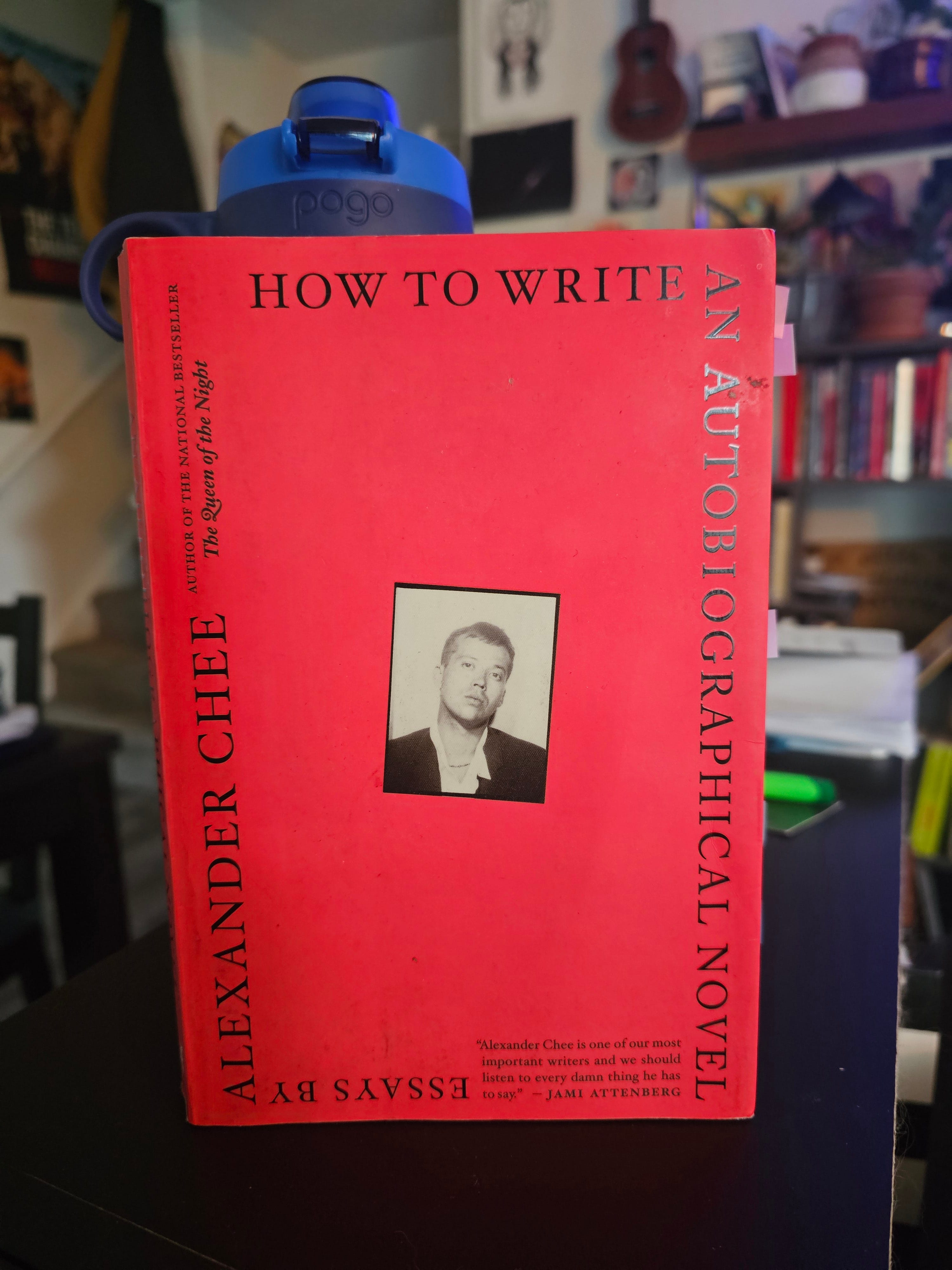
If you have waited years to read this book or wondered what, if anything, it could teach you as a writer or reader or even a human, shut up and read Alexander Chee’s How to Write an Autobiographical Novel.
I will absolutely admit that I have never read an Alexander Chee novel, but I have read essays and interviews. My main reason for wanting to read this book with this book club is that I’ve heard How to Write an Autographical Novel talked about as a unique literary memoir that wasn’t really a craft book but was sorta a craft book with a unique structure. The structure is that the memoir is a collection of essays that are sometimes connected and sometimes not. Chee talks about writing and his career, but more than anything he talks about life. His life and the lives of those around him. His loves and failures. And it all makes the whole memoir more emotionally effective.
Before I start reading a book that I plan on annotating, I’ll write out what I want to learn and why I am reading the book. For How to Write an Autobiographical Novel, I wrote:
I think, hope, or believe I will learn how to let go more and trust my talent (dare I say) as a writer to craft a compelling literary work. But like with Delany’s I’m going to stay open to how this hits and moves me. It may even have some connections or helpful hints for [my novel].
Do you ever have a moment while reading an author memoir where they say something so unreal and true to your experience, life, and feelings, that it gives you hope for your career and self? I had this moment early on with Chee’s memoir.
“There was something I wanted to feel, and I felt it only when I was writing. I think of this as one of the most important parts of my writer’s education—that when left alone with nothing else to read, I began to tell myself the stories I wanted to read.” (How to Write an Autobiographical Novel pg. 13)
This line came early in the book and reminded me of something from my childhood that used to happen a lot before I started writing. I used to have these dreams where I would be in bed or sitting somewhere fully engaged in a book. Then I would realize that I am dreaming and the book I am reading is one I am creating in real time as I read it. Realizing this, the dream deteriorates and the words fall out of the book and render nothing but blank pages.
This is a reoccurring dream that only happens when I am not writing. For a long while, I did not know what this dream meant. Now, that I have been writing non-stop since my mid-twenties, I have not had that dream. I think that, like Chee, there is a part of me that when not writing, still needs to write so it does so in dreams.
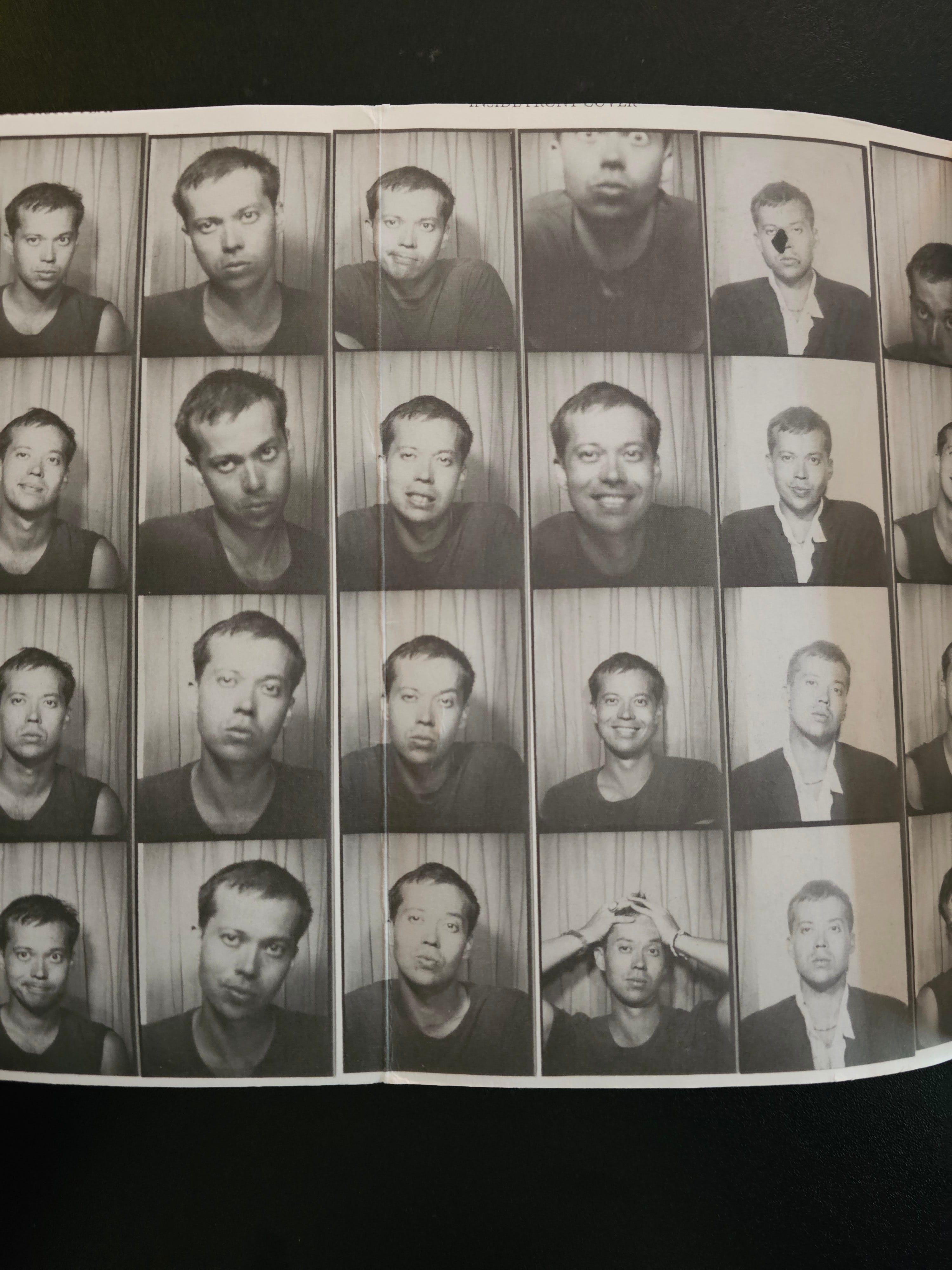
Another nice similarity between Chee and my life is that Chee went to the Bennington Writing Seminars, my MFA program. When I tried to find out more information, I found that he refers to two Benningtons, the seminars (the MFA program) and the workshops (a summer residency). I am a bit confused on the details but he may have gone to the Bennington Writing Workshops and not the Seminars since he went to the Iowa Writer’s Workshop for his MFA. Still, the connection of reading the book and seeing him talk about Bennington was a nice connection as I worked on my MFA thesis.
Despite how much Chee throughout the beginning part of the memoir talks about life, he also spends a lot of time writing about how he learned how to write. I’ll get into more of that later, but the weaving of how much he commits to his craft and the love of life around him was inspiring. Even when working as a waiter or in cafes or bookstores, Chee still wrote, still looked at the world in a way that took the emotions and experiences in a way that pulls you into the protests, the anger, the love, and the wildness of his youth and life.
The chapter on losing a close friend and partner to AIDS almost made me cry. The love. The care. The death. The fight. I wanted to cry and scream to read about AIDS and spend everyday thinking of all those who died and the love lost. I am taken back with how Chee narrated the essay in a nonlinear spiraling way because I think that is the only way to tell this type of pain, from all around and up close, not shying away, but not rushing either.
“…my desire for him was like a private horizon line, hidden inside every view I had of hat morning” (How to Write an Autobiographical Novel pg 80)
Whatever topic Chee wrote about I wanted to explore more and get involved in. He weaves in his passion and emotions while building a full visual of a topic, making the pieces feel deeply touching. There was a chapter on rose gardening and it made me want to become a rose gardener, which I never considered before but the way Chee wrote about it made it seem like a fun challenge that would yield beautiful flowers both inside and out.
That style of writing is what makes How to Write an Autobiographical Novel such an emotional experience. You are there with Chee and it feels like he is not hiding anything from you or dressing it up to make him seem like the best person or writer in the world, though he also doesn’t hide his big dreamy desires.
“…I dreamed of being discovered as a prodigy and led from the classroom as a valued psychic asset...” (How to Write an Autobiographical Novel pg. 18)
‘“…cut out only the best sentences, [Annie Dillard] said, and tape them on a blank page. And when you have that, write in around them...Fill in what’s missing and make it reach for the best of what you’ve written thus far.” (How to Write an Autobiographical Novel pg. 51)
The top craft lessons I learned from How to Write an Autobiographical Novel.
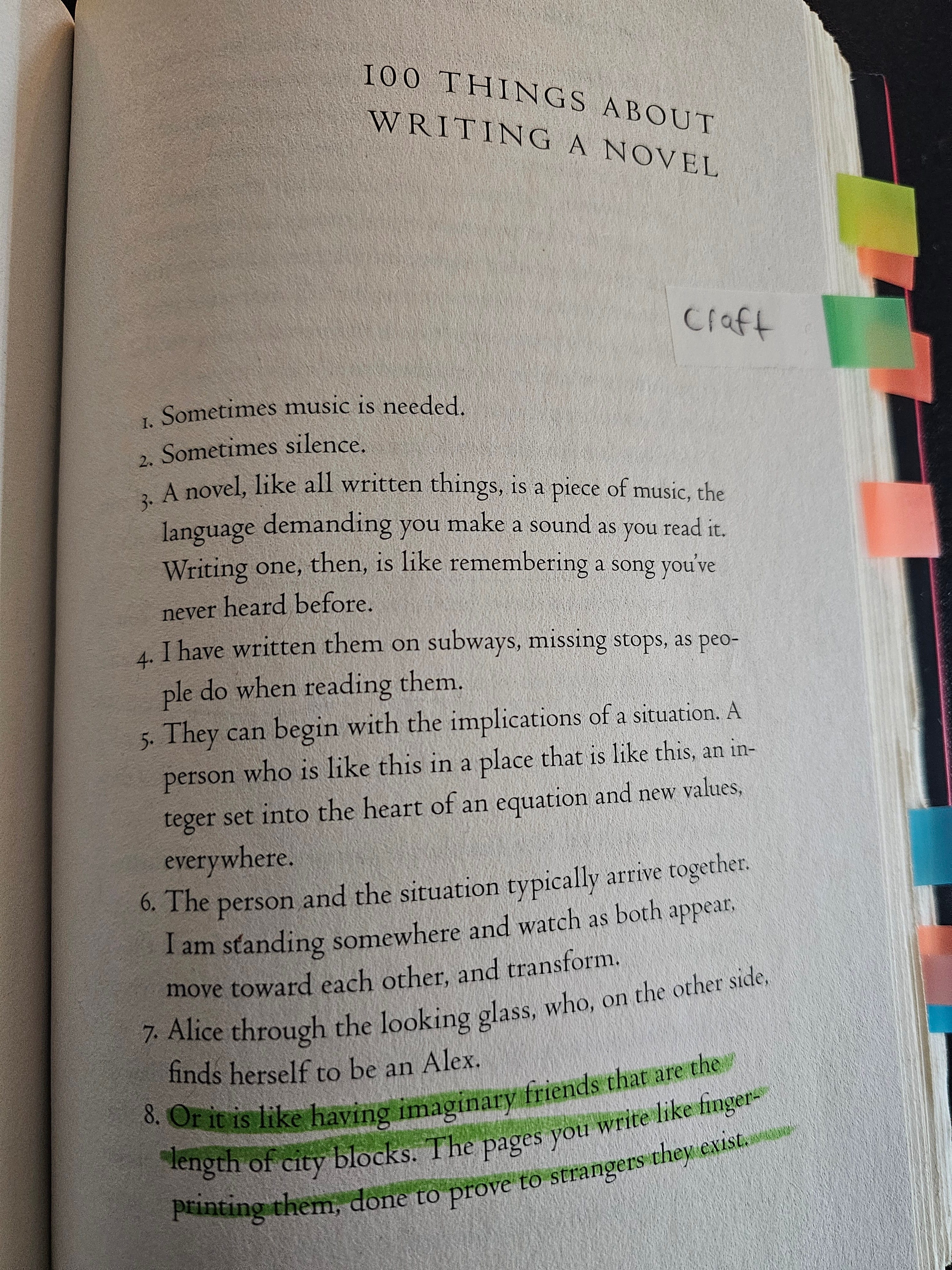
There is a whole essay called ‘100 Things About Writing a Novel’ that is an experience to read and one of my favorite lists on being a writer. I read the chapter while in the heat of writing my novel and the strangeness of the chapter really helped me trust the weirdness I was working with and lean into it more. A lot of what Chee wrote felt so true to my experience of writing my book. The novel is a stranger lover writer story and so much more and I was chasing after it because I couldn’t imagine not catching up with the novel, maybe even catching its eye and attention long enough to catch a glimpse at its face.
Don’t go in expecting that that chapter is going to be the one that tells you the secret to writing a good story. More than anything, that essay taught me how to not think about the technique so much as the story. It didn’t tell me how to do this, but the feeling I got from it was that the technique will emerge on its own if you keep chasing after the novel.
I have heard this before during my MFA experience from teachers. I will admit that by doing that type of wild, loose, and intuitive writing, my stories have gotten better, more unique, but I don’t think I could have done that style of writing free form as a new writer years ago. When I did do that type of writing before, while the stories were fun to me, they didn’t breach the depths of what a good story could do. Now, that I have lots of practice and study under my feet, I can lean into that wild style of writing and understand how to get in that groove that feels like talent or skill working its magic out on the page.
A lot about Chee’s memoir and Delany’s are similar in what they say about life and how they lived. A commonality that I am finding is that both authors lived their lives fully. While Delany did not have a job so to speak as much as odd ways of making money, he still spent a great deal of time operating outside of his social and class circles. His experiences and the general daring nature of both authors helped them, I believe, become the great writers they are.
Chee worked as a waiter for years and found that the life experience gained “out past the limits of my own social class.” He, like many other professional writers, believes that living is one of the best ways to be a better writer. “Your imagination needs to be broken in…to become anywhere near as weird as the world.”
When I read that line, I had to stop reading and just sit with it. I have been having this thing happen recently when I sit down to work on article pitches for magazines where I can tell that my imagination is too bound and limited by the way that I live my life. I’ve talked about this before in my Delany essay, but I live a very comfortable and cozy life. I work from home, have a reliable car, a cute ass cat, and a well stocked fridge. I enjoy staying in and listening to music or audio books, watching TV, reading, and just being cozy and comfy in my own space. That type of life, however, keeps me trapped in a bubble where my imagination is only plugged into books, games, and TV. Not into real life and real connections.
With graduation coming up and school ending, I am so ready to give time and space to getting out of my place more and spending time volunteering, talking with people, and not so wrapped up in my studies and work. I need to break my imagination in and refill it with weird, unique, and interesting moments.
Here’s how I’m going to break my imagination in over the next few months:
Attend talk sessions at my local library
Remove my TV from my apartment
Rearrange my space to be one of reading and gathering
Joining my local game developers group
Attending improv and story game sessions in my local area
Volunteer with local organizations
Attend local music, comedy, and shows in my area
Engage with strangers more
Keep going to my local silent book club
Have more intimate and deep conversations with people in life
If you’ve read How to Write an Autobiographical Novel and are also in the same boat of wanting to break your imagination in, I’d love to know how you want to do it.
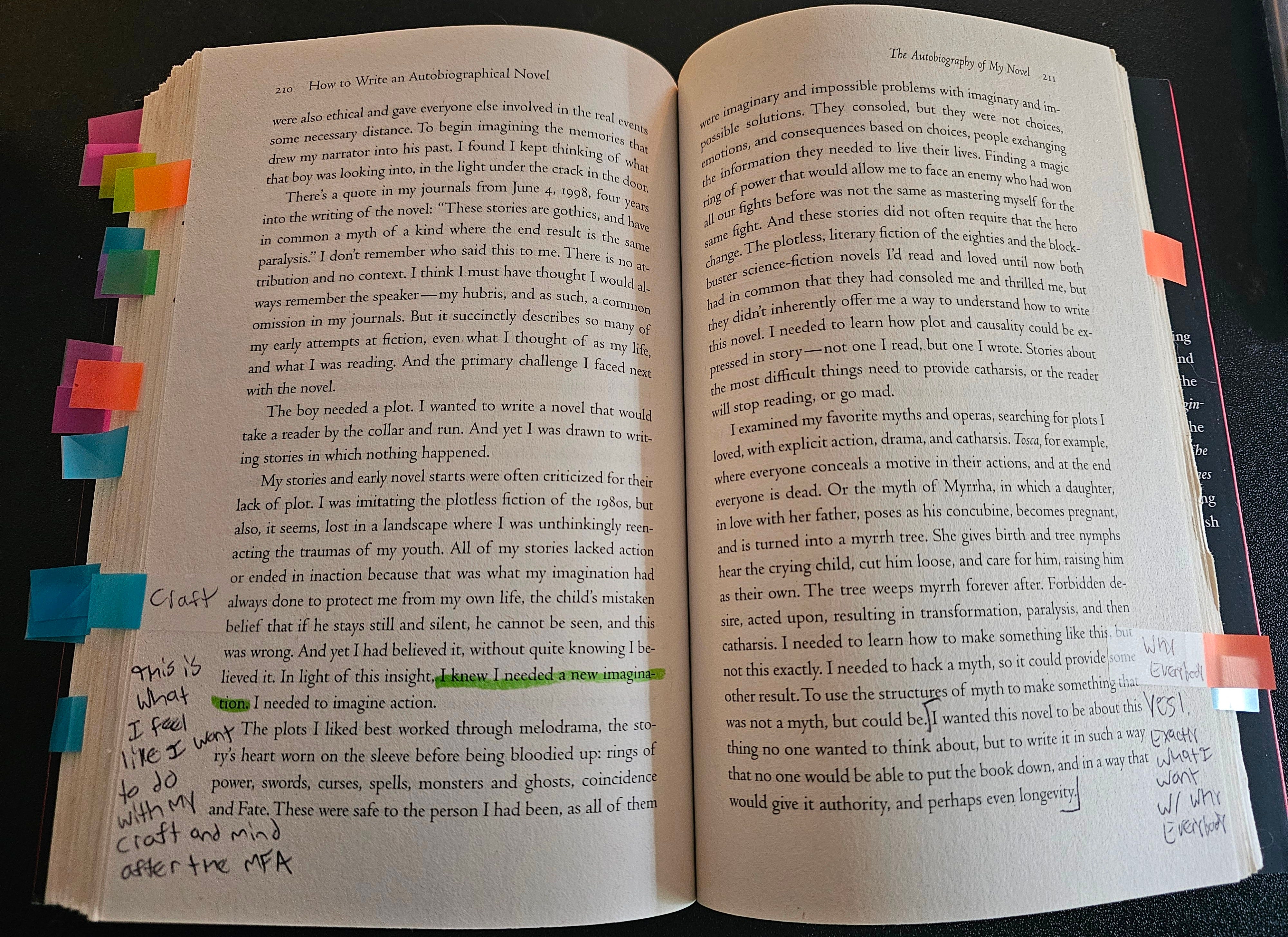
Even though Chee later went on to go to the Iowa Writer’s Workshop, he also thought MFA programs were the death of literature. He even took a surprising approach to applying to MFA programs by sending in a story that was wild and he believed could not exist in MFA culture, “I applied as a cynic, submitting the story I was sure my best, the one I was sure wouldn’t be published, sure they would reject me…The plan was that a program devoted to the creation of minimalist realism would have to reject me and I could go on my way, my beliefs about everything confirmed. But that’s not what happened.” Not only did Chee get into Iowa but he also got accepted to UMass Amherst, resulting in him getting a higher fellowship amount from Iowa, where he decided to go.
As someone who went through applying to grad schools three or so years ago, a part of me wishes I read this before. I submitted a story that was wild but a story that had already been published and was, for me, a safe bet to send. I didn’t take any risks in applying. What I got from Chee’s essay is to trust your gut and write the story that is you and yours. Don’t worry about anything else, but definitely don’t worry about being safe.
Even if I didn’t use this approach during my grad application process, I will moving forward. Instead of sending the safe pieces in to magazines, grants, fellowships, and residencies, I’ll send the piece that is just mine and may feel too out there but also feels alive and like the type of work I want to be doing.
There is a whole essay 'The Writing Life’ that gets into Chee’s time working with Annie Dillard that rendered the most writing exercises and lessons in the book. Like this piece on descriptive writing as told and remembered by Chee:
“You want vivid writing…Verbs, first. Precise verbs. All of the action on the page, everything that happens, happens in the verbs. The passive voice needs gerunds to make anything happen. But too many gerunds together on the page makes for tinnitus: running, sitting, speaking, laughing, inginginginging. No Don’t do it. The verbs tell a reader whether something happened once or continually, what is in motion, what is at rest…Did he run quickly or did he sprint? Did he walk slowly or did he stroll or saunter?” (How to Write an Autobiographical Novel pg. 50)
The essay is filled with these very stern and direct declarations on writing from Dillard, but they also aren’t wrong. There is an extreme exercise that is meant to elevate a story from okay to amazing by cutting out every sentence that is the best sentence in the story. Then the writer is meant to write toward those sentences using other great sentences.
“One afternoon, at [Dillard]’s direction, we rought in paper, scissors, and tape, and several drafts of a n essay one that we struggled with over many versions. ‘Now cut out only the best sentences, she said, and tape them on a blank page. And when you have that, write in around them’…Fill in what’s missing and make it reach for the best of what you’ve written thus far.”(How to Write an Autobiographical Novel pg. 51)
My favorite exercise that Dillard suggests is this one:
“Go up to the place in the bookstore where your books will go, [Annie Dillard] said. Walk right up and find your place on the shelf. Put your finger there, and then go every time.” (How to Write an Autobiographical Novel pg. 54)
What a way of giving yourself some inspiration and fire to keep writing, but actually marking a space for yourself on the shelf. It’s like making a promise with the bookshelf that you will see it later.
The end of the memoir closes on a sad but uplifting note. Chee does not directly state what is going on in the world, but he alludes to Tr*mp’s presidency and election having a hard impact on his writing students (and the world). He feels the helplessness and recalls other moments where tyrants took power with a mad glee of destruction. He does not shy away from the fact that it is easy to turn away from the craft of writing during these moments.
But Chee challenges us to stick with writing. To stay in the game, listening, and writing, and fighting back with our words.
“I will always want my students to know that if what you write matters enough, it makes no difference where you write it, or if you have a desk, or if you have quiet, and so on. If the essay or novel or poem wants to be written, it will speak to you…The question is, will you listen? And listen regularly?” How to Write an Autobiographical Novel pg 258.
Thanks for reading this long article about Alexander Chee’s How to Write an Autobiographical Novel. If you haven’t read this book, I’d suggest it for any author who is trying to write something true, weird, and uniquely your own. It helped me see how I can better connect with the world around me.
Interested in Joining the Book Club?
Subscribers: Let me know by liking or commenting on this. I’ll set up a chat for us to decide meeting times for July’s book Push the Wall by Frank Miller.
Non-subscribers: Subscribe to Writing Skins. As of right now the book club is free to join and participate though some bookish posts will be paywalled!
Writing Skins is a reader supported newsletter for readers of speculative fiction, nonfiction, and good books of all genres. Book Club is exactly what it sounds like: book lovers reading books and talking about them together.
Thanks so much!