
Fourth Term Residency - The Thesis Term
Photo essay of my recent MFA residency at the Bennington Writing Seminars.
My two year MFA program is coming to an end! This fourth residency was the last I’ll be doing before presenting my thesis, defending it, and graduating. Here’s how it went in pictures!
Writing Skins is a reader supported author newsletter that shares excerpts from an award nominated speculative fiction writer’s craft journals. It offers a vulnerable, funny, and interesting look at the writing life, craft, and storytelling. Craft Chat is the writing craft section of the newsletter where I examine a subject, piece of media, technique, or other related creative nonsense.
I am having a weird moment with flying. I am typically afraid of flying but the anxiety is always leading up to flying. Once I’m in the air and the anxiety meds have kicked in, I’m calm and just cruising. I do have to tell myself that I am on a train or a bus and whenever turbulence happens it’s just bumps on the road.
But I learned that when leaving from home, it’s best to leave really early in the morning so that I am not awake long enough to feel the anxiety before the flight. That’s what I did this time. I flew out of Seattle early in the morning and landed in Philly in the afternoon.
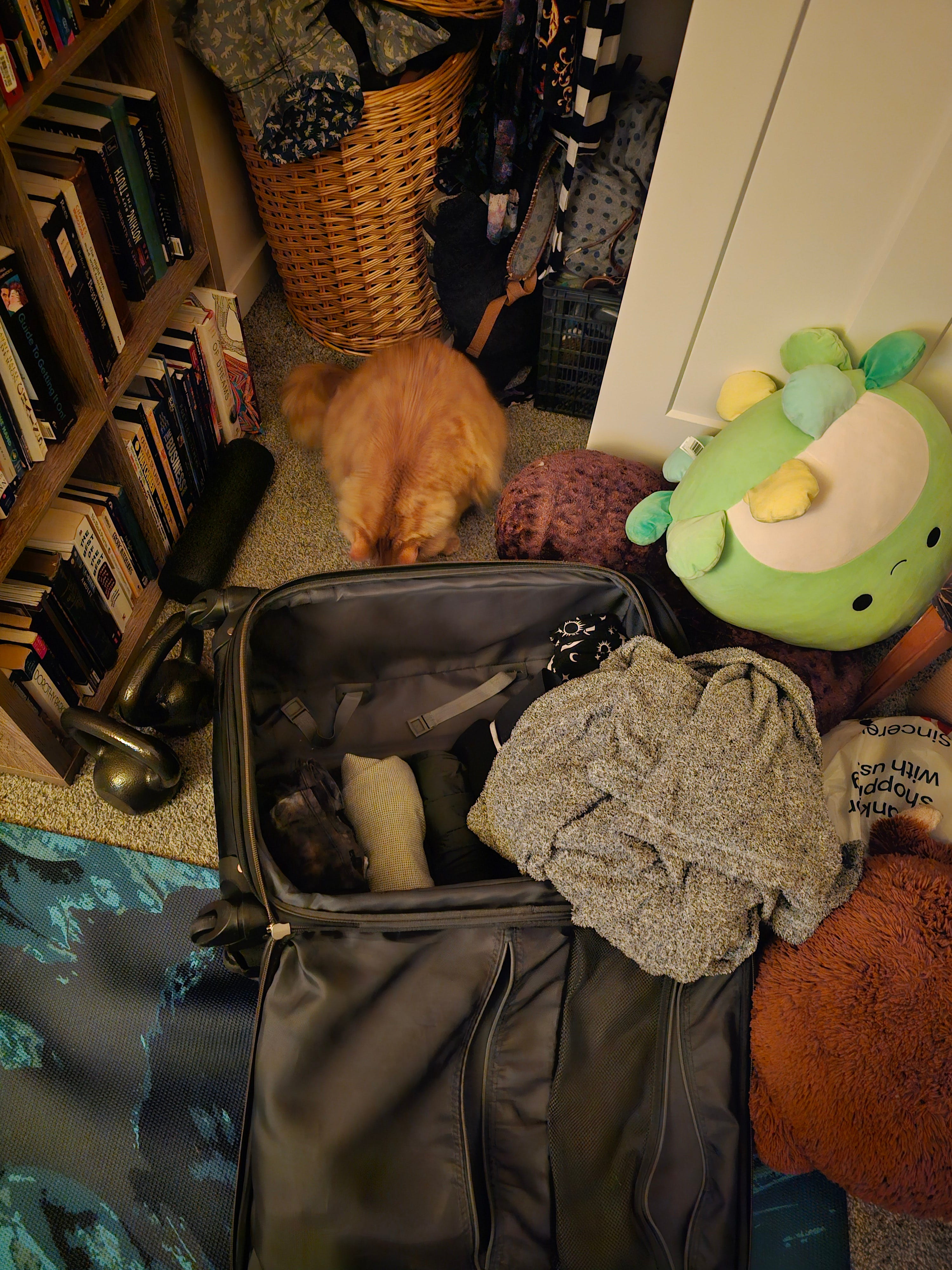
Leading up to flying, I did a lot of journaling about how I wanted this term to go. Even though this fourth term is considered my thesis term, I’ve been seeing the past six months as the start of my thesis year (incoming post on my blog coming soon). This term for me is all about prepping for after the end and setting myself up for opportunities after graduation. I spent the last term, prepping for the end—this term. So my creative thesis and nonfiction critical essay are all done.
Since my creative head space isn’t bogged down with the heavy work of crafting my thesis, I am carving out space each week to build toward using my MFA time to set me up for success after. With my MFA, I am hoping to land some teaching jobs, get into some residencies and fellowships, and secure some grants. I also have compiled a short story collection of my published and unpublished stories that I’m going to be submitting to agents this year.
I know it’s wild to say during such a dark time for art funding, education, and people of color that I am looking to secure the very little funds and positions we have in this country to further my stories and those of others. But I truly believe my stories matter even during the dark times because I write stories of the dark times, of characters surviving, of characters loving despite the chaos and destruction.
Before making my way up to Vermont, I spent a day in Philly with my friend Nicole from my cohort. I got to meet her lovely partner and equally lovely pets. We took a couple of walks around her neighborhood, Brewerytown, and hit up Fairmount Park. I was so close to the Rocky statute and didn’t even know it! I also got an amazing Italian hoagie—hoagie! what a word that conjures feelings of home—from a hole in the wall spot that awoke long dead East Coast tastebuds.
This was my first time in Philly in about 10 years and my first time spending time in Philly for over an hour. I used to spend so much time there as a kid with my family because New York City was too far away from where we lived in South Jersey, so if we wanted to go to a big city, Philly is where we went. As a kid, I loved how Philly felt old and historic but also rough and unforgiving. Killadelphia is what it was called on the news and by some family members for a long time when I was a child because of how many killings and shootings happened there during the late 90s and early 2000s.


Philly is one of those cities where I ask myself sometimes, could I live there? Spending time walking around the neighborhoods and seeing some the sights reminded me that as a kid, I did think about living there. I imagined stepping out onto cobblestone streets and always having the best access to food, life, and culture.
After a night in Philly, me and my friend met up with another friend and carpooled up to Vermont together. It was a long drive, about 6-7 hours with stops, but we talked the whole way up. We talked about how the third term went for each of us, writing pursuits after graduation, feelings on the upcoming term, life, love, and family.
I love my cohort and friends I’ve made in the program, but that being said I am a pretty solitary person. I have a maybe 4 or 5 friends and people in my life that I talk to on the regular and spend time. Yet, somehow with my cohort, no matter how many weeks or months its been since seeing and talking to each other, I’m able to flow easily into conversation with them. After the hours of talking in the car, however, once we got to campus, I was socially drained.
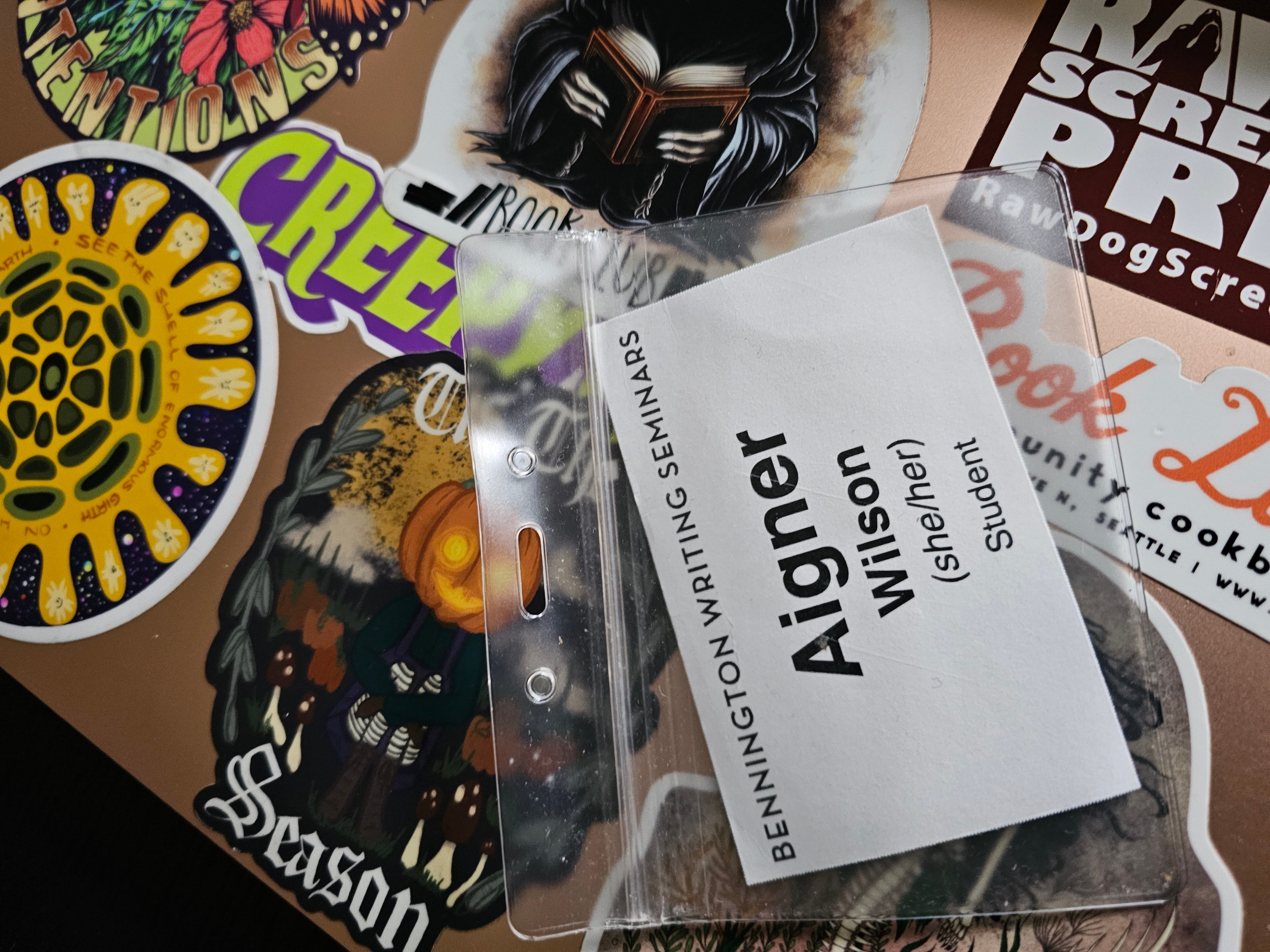
While I was excited to see people from my cohort I hadn’t seen or spoken to in months, I also had to admit to them that I was drained so my excitement wasn’t showing as big as it was. On the outside, I was reserved, direct, pointed, and exhausted. On the inside, I was buzzing.
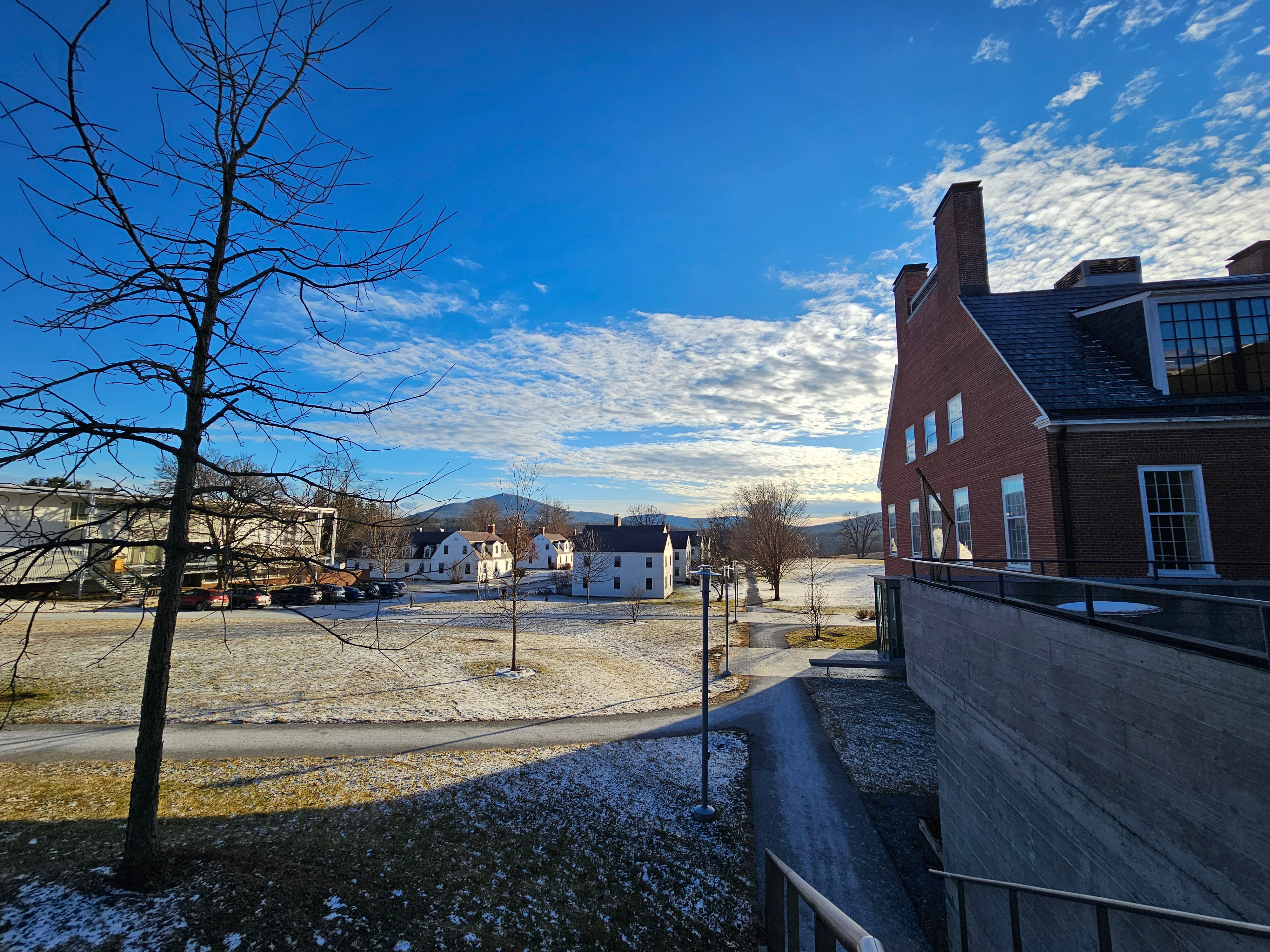
Bennington College is hidden between rolling mountains, surrounding the campus on all sides in the distance. While it’s in the town of Bennington, it’s got its own little forested area, hidden away from the rest of the town. It’s an old campus that’s been an art school for decades. Shirley Jackson’s husband worked at the school as a teacher and one of the buildings is the inspiration (supposedly) for Hill House. Donna Tarth’s Secret History is based on the campus. And more writers than I care to list here have traversed the grounds as students or teachers.
To say that it’s alive with inspiration is an understatement.
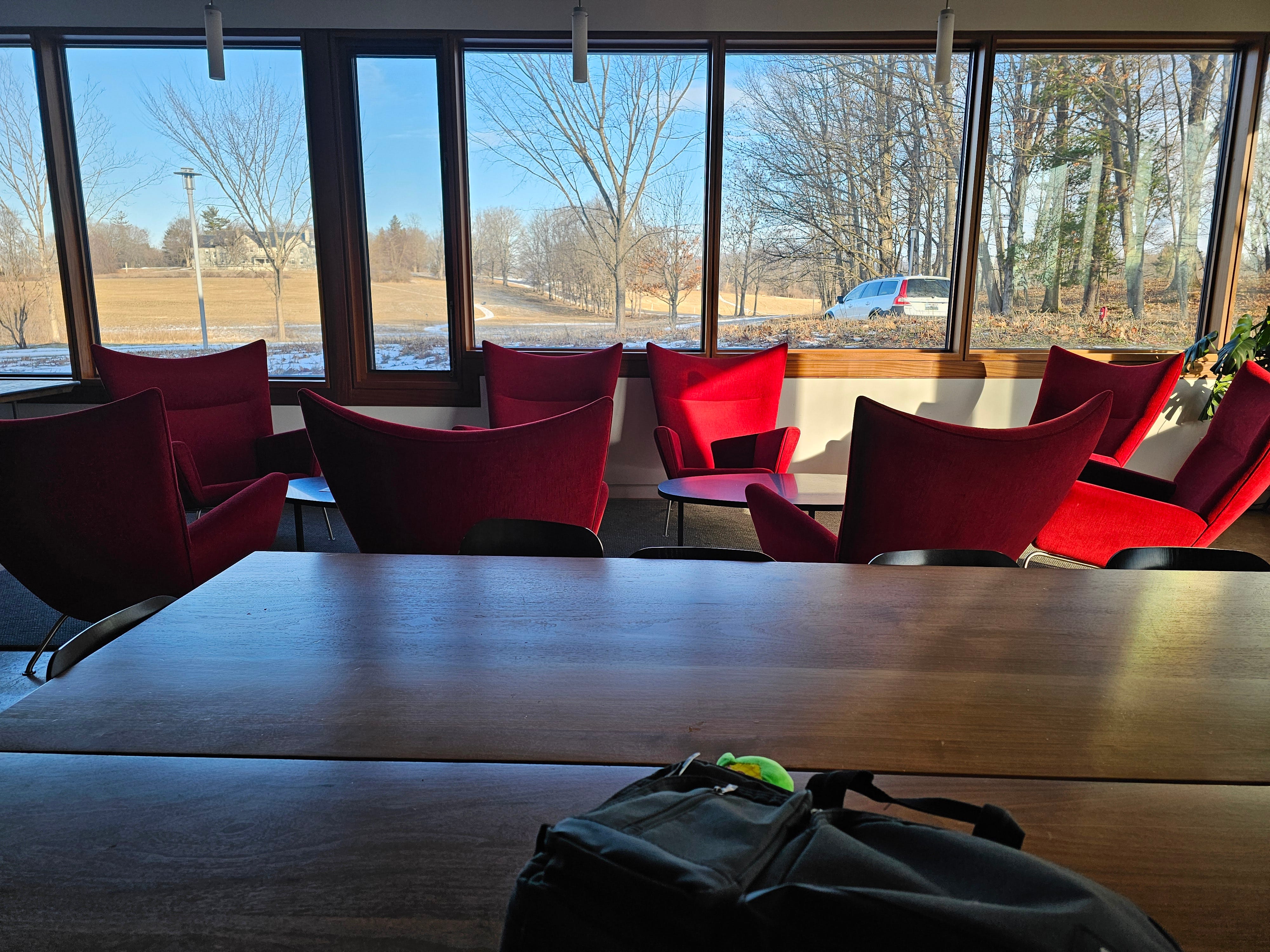
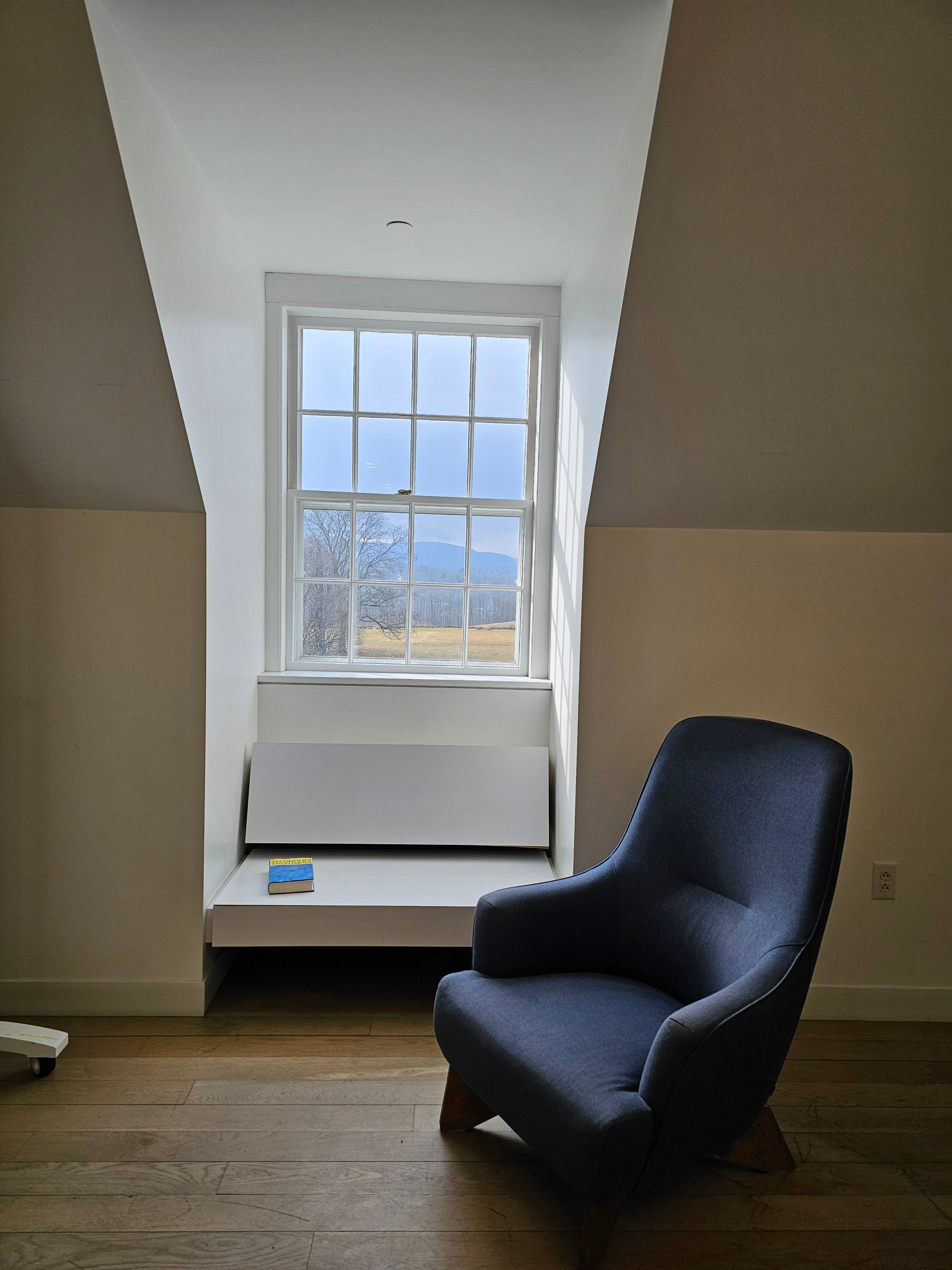
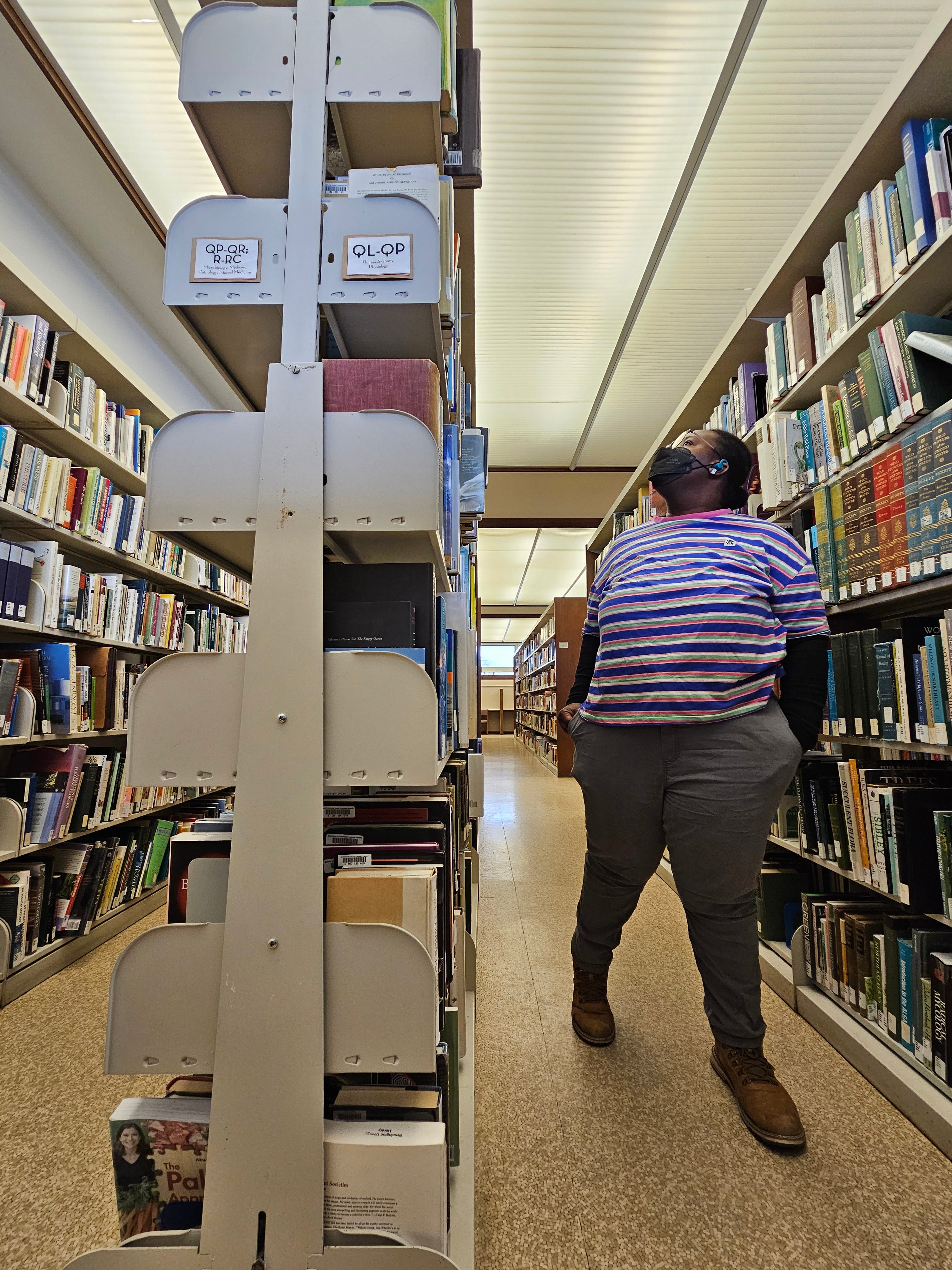
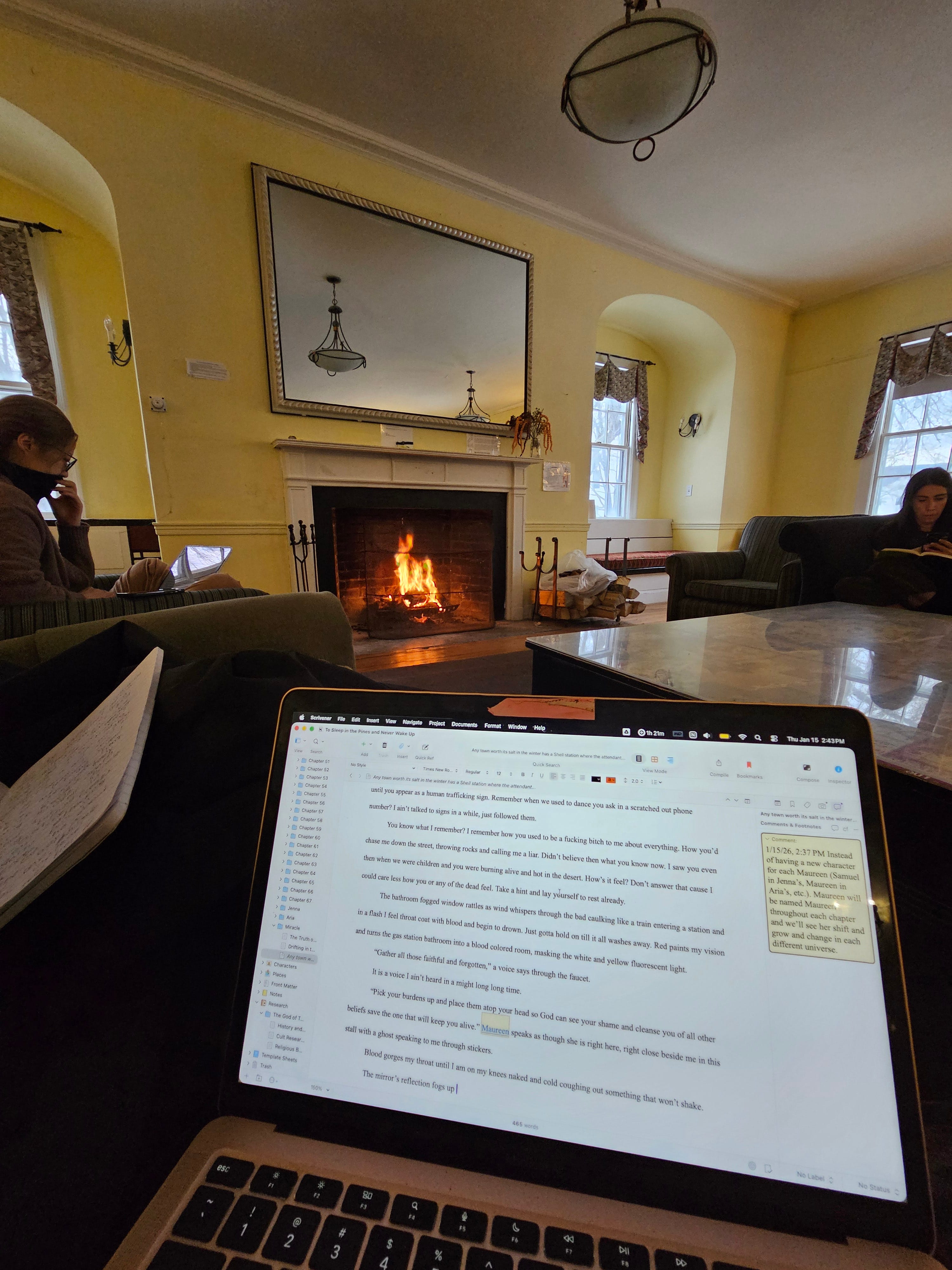
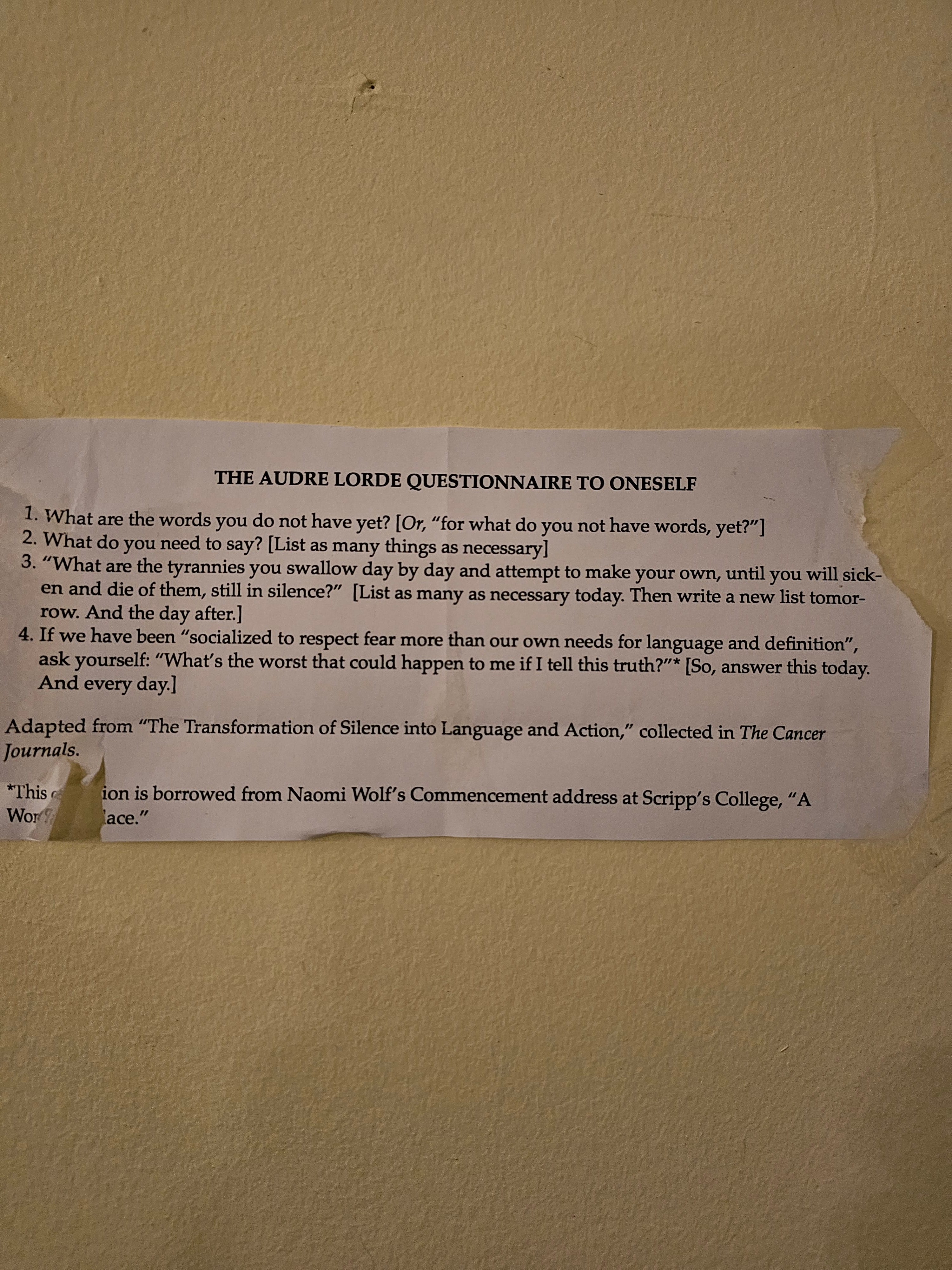
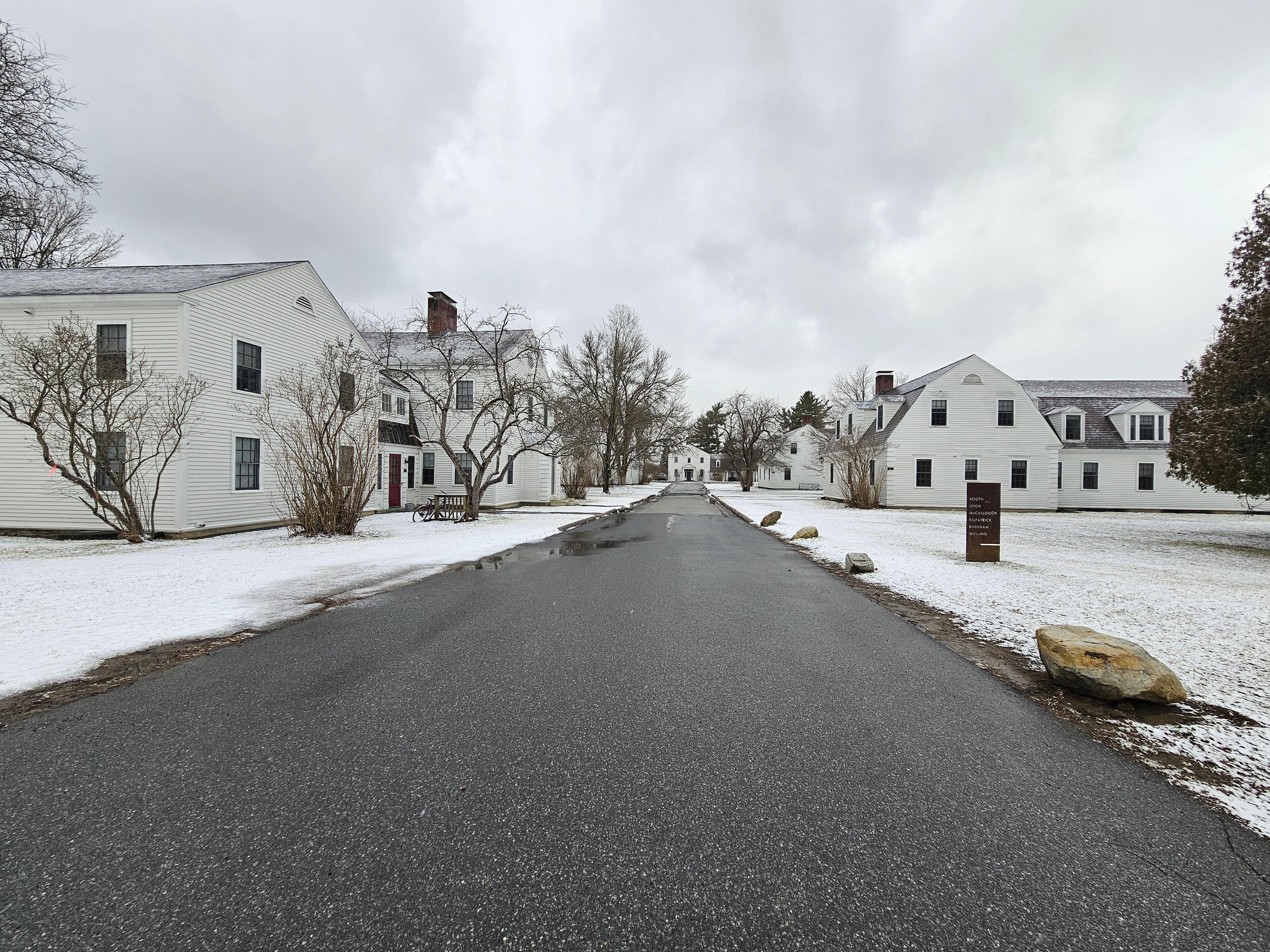
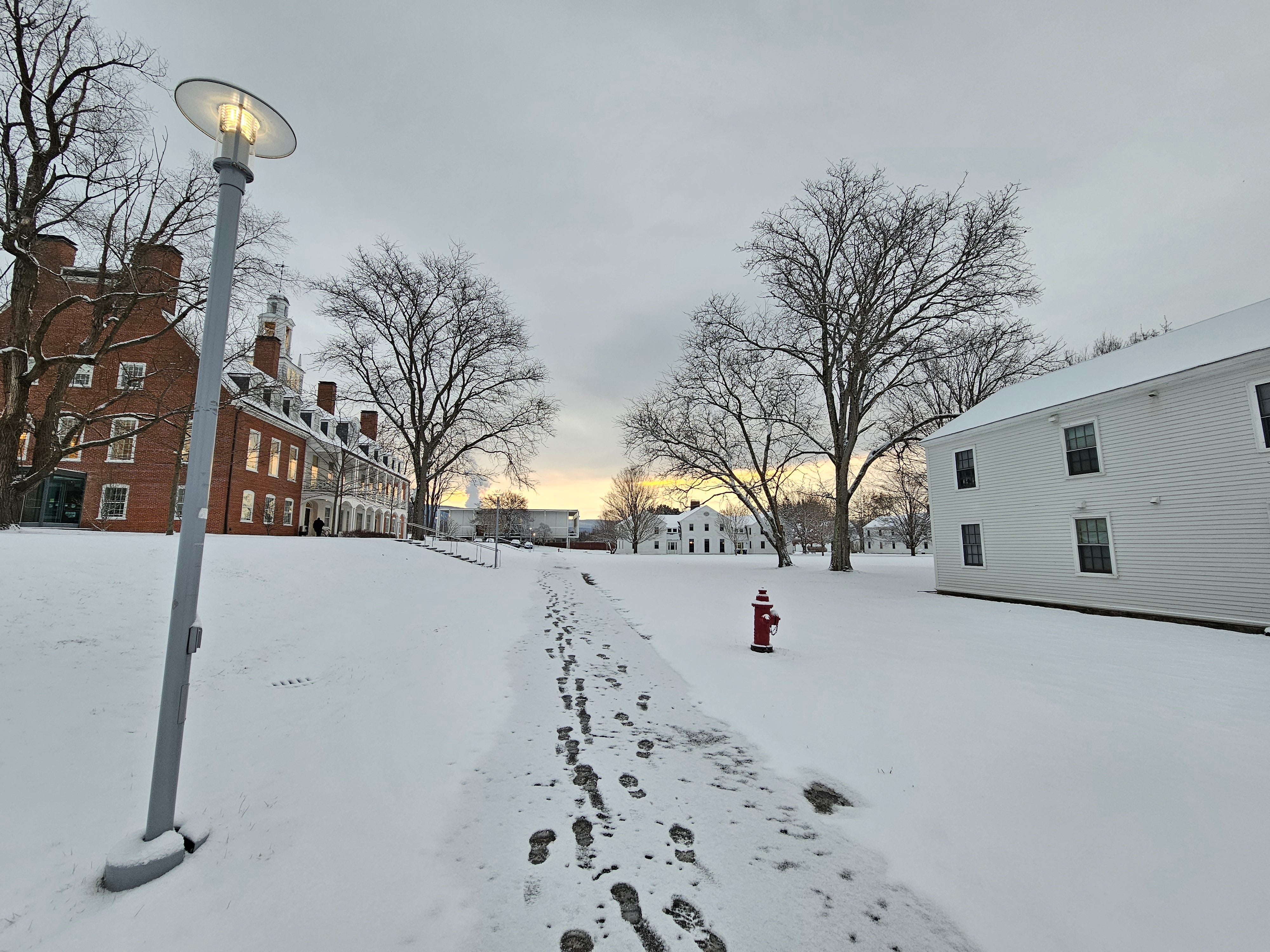
Being back on campus, felt like going on an intensive writing retreat. I knew that for the next 10 days, I’d be doing more writing, learning, communicating, sharing, editing, and thinking in one condensed span of time that by the end I’d be different. My work would be different—or at least, that’s always my aim.
I had a plan for this residency of using it as a time to focus deeply on my novel and write as much as I could. My goal was to write 25,000-30,000 words, which may sound like a lot but last winter when I used the time to write the first draft of my novel, I wrote about 26,000 words.
No matter what I felt about the upcoming days or my intention, that first night back, all I wanted to do was unpack, eat dinner, and sleep. So that’s what I did. I talked to some 1st termers who were just starting the program and ate with some friends, but as soon as I was done with that, I crawled back to my dorm room to pass out so I could start my first day strong.
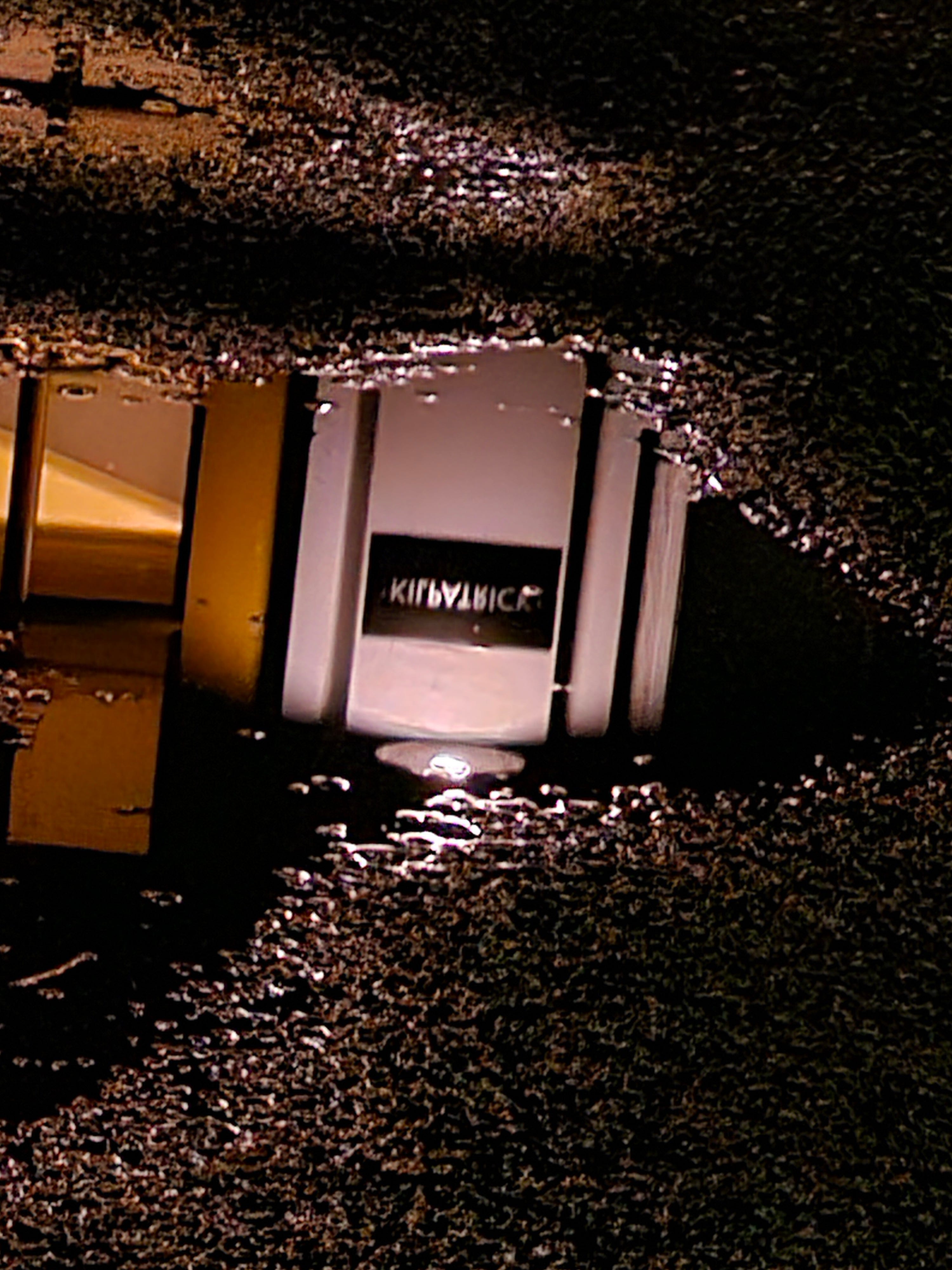
That first night or the night after, I got some joints from a friend in my cohort and went on a walk around campus. I love going on night walks but don’t do them a lot back home because I lost the wildness inside that made me feel more dangerous than the night in Olympia, but on campus, I feel relatively safe walking around at night. The biggest thing I needed to worry about were patches of ice and moose.
The walk about gave me a lot of time to think about my writing and my choice to focus so heavily on my novel. I know that it won’t be done and ready to query for another year or so. I know that it’s going to take me a lot of internal and external work to make right. I know it’s weird and strange and, as one of my workshop teachers Carter Sickels said, ambitious.
So why spend my precious time on campus working so hard on it? Why not work on something that would give me a quicker return, like editing up the last short story for my collection, searching for agents to pitch that collection to, applying to teaching jobs, submitting stories to magazines, reading magazines?
Why choose this novel over all other projects?
The answer I found in the dark. I was choosing that novel because of all those reasons above. It is strange and hard and ambitious and will take more focus and vulnerability than any other work I’ve done so far. There wouldn’t be another time where I would be surrounded by other writers, have access to the college campus, those mountains, the books at the library, and having my meals and cleaning taken care of.
I was choosing that novel because all of those other projects didn’t have me writing. They weren’t challenging me to be, as I set as my intention at the beginning of the program, to be unrecognizable on the page. I walked around campus that firstish night and thought how I wanted to always choose writing again and again and again.
I want to wake up for writing, go to bed dreaming of writing, talk about writing without talking about writing, dance around writing, pull writing in and lock it up, devour writing like a double cheese burger with onions and mushrooms and endless fries. I want to burst with, for, and toward writing.
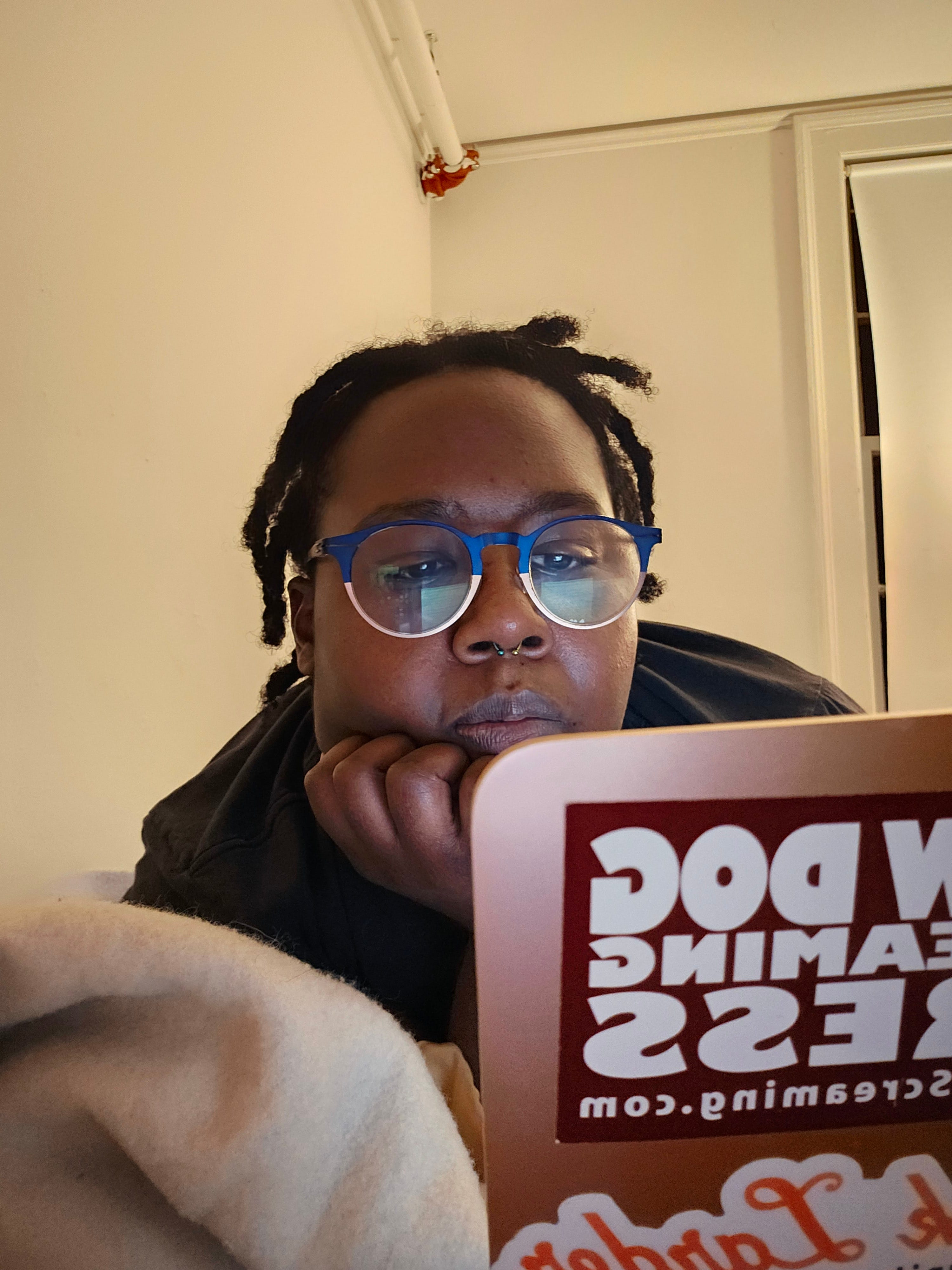
And my novel feels like that more than any other project—except for a secret treat project that I started writing a couple months ago and will spend time writing after I finish my current book project.
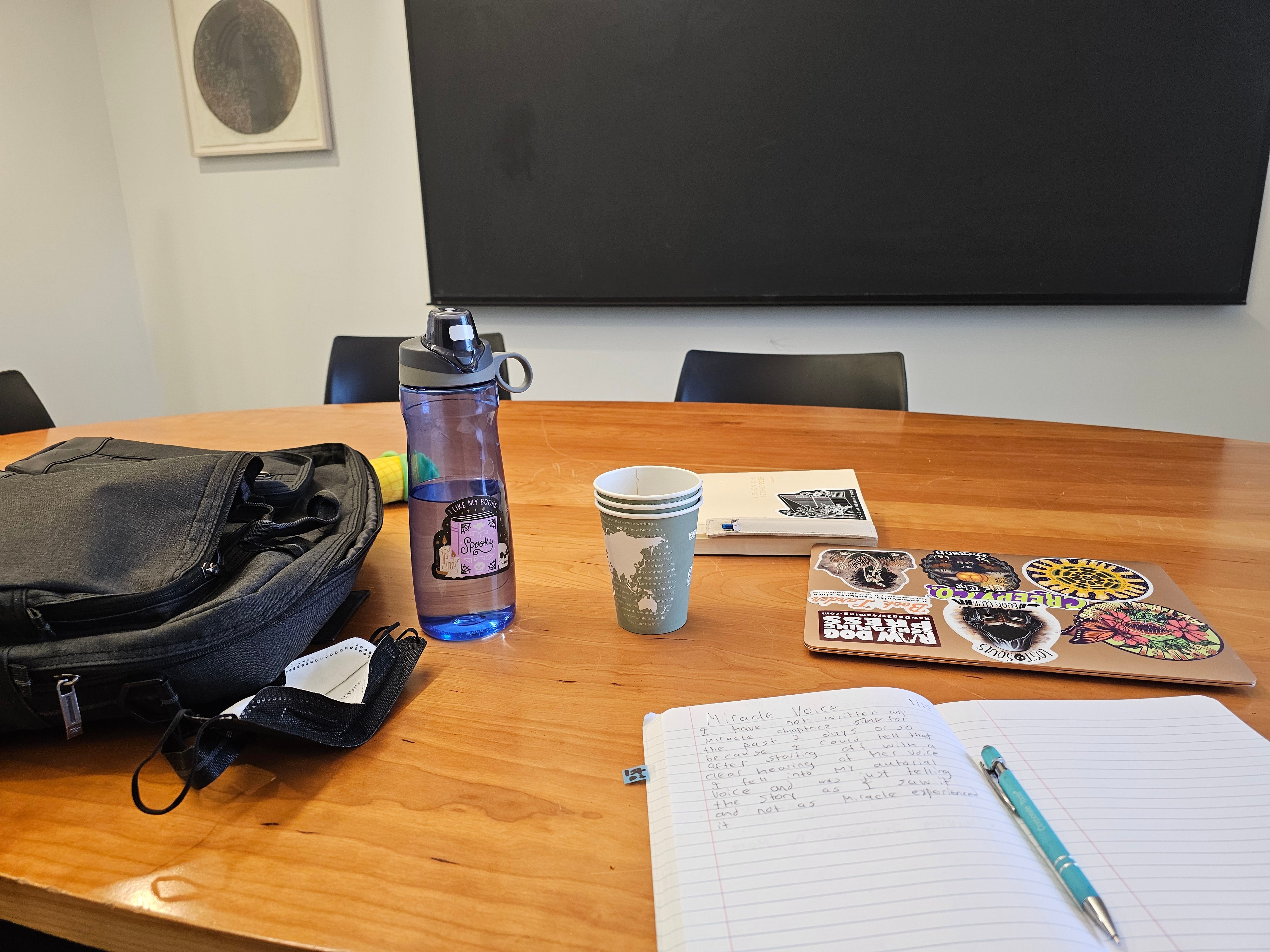
In order to live and eat and sniff writing like I wanted to during residency, I set a pretty rigid schedule. I was committed to choosing my novel each day. I would only go to things that would help me write my novel and inspire me. So if I wasn’t in a required workshop, I was writing or editing my novel. Each day, I’d check the schedule of classes, lectures, and readings and decide if any would be helpful for what I was working on. If I thought it would, I’d go. If not, I’d find a spot to write.
In the mornings, I’d wake up at 5 AM to get ready for the day, so I could meet with a couple friends and write in the common area of the building for a couple of hours before the day got started. Then I’d head to breakfast for a quick bite and catch up with friends before either going to a class or working on my novel in someway.


Some days, I’d write with other writers in another common area. But many days, I’d go to the library and do research or write alone in some empty classroom.
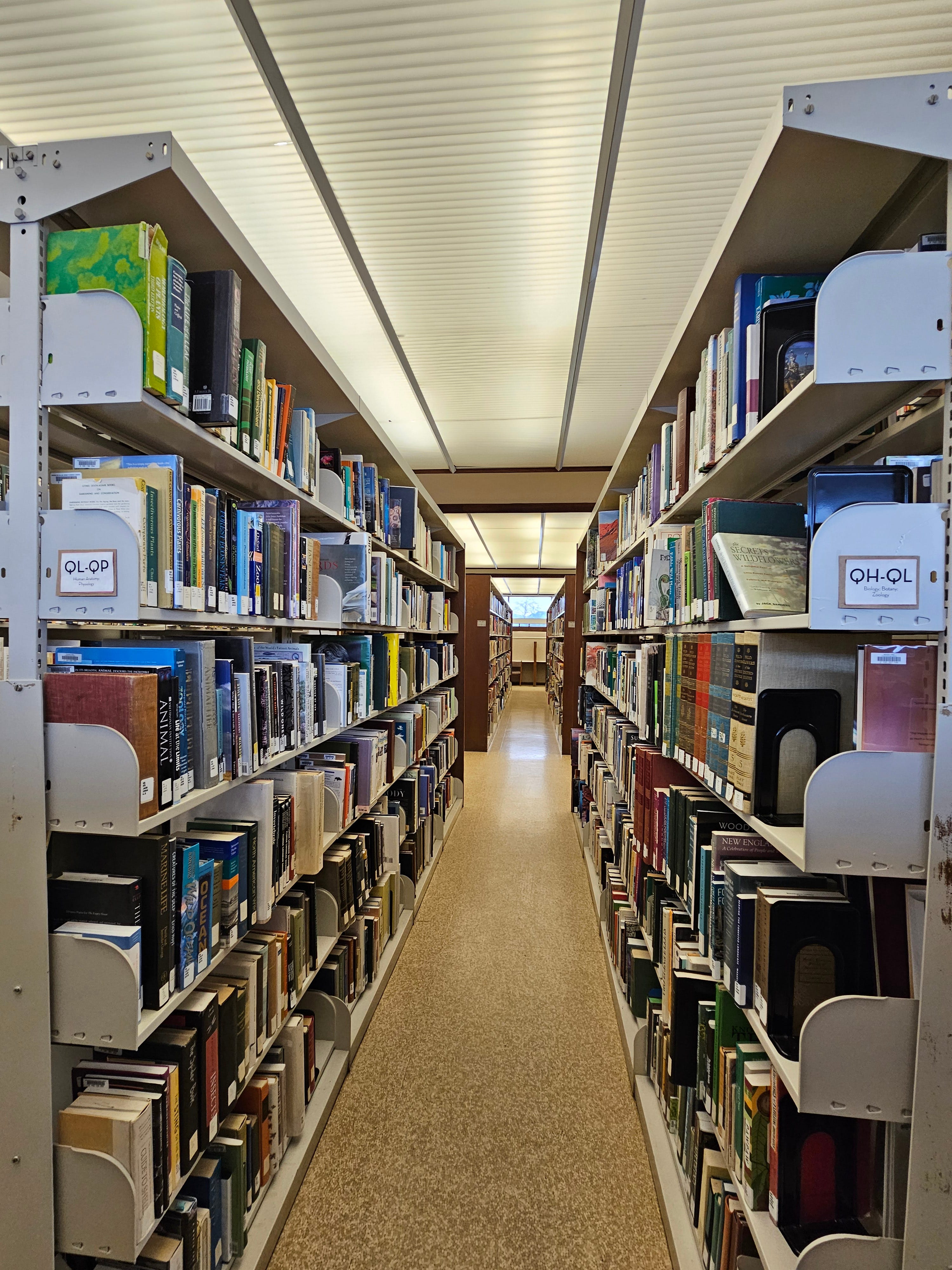
For the novel, I wanted to use the resources at the library to help me paint my world and understand the characters better to get a sense of their voices. I read a lot of books and set for hours trying to hear my character’s speak and see my world clearer. This resulted in pages of notes and adding new books to my reading list for the year.
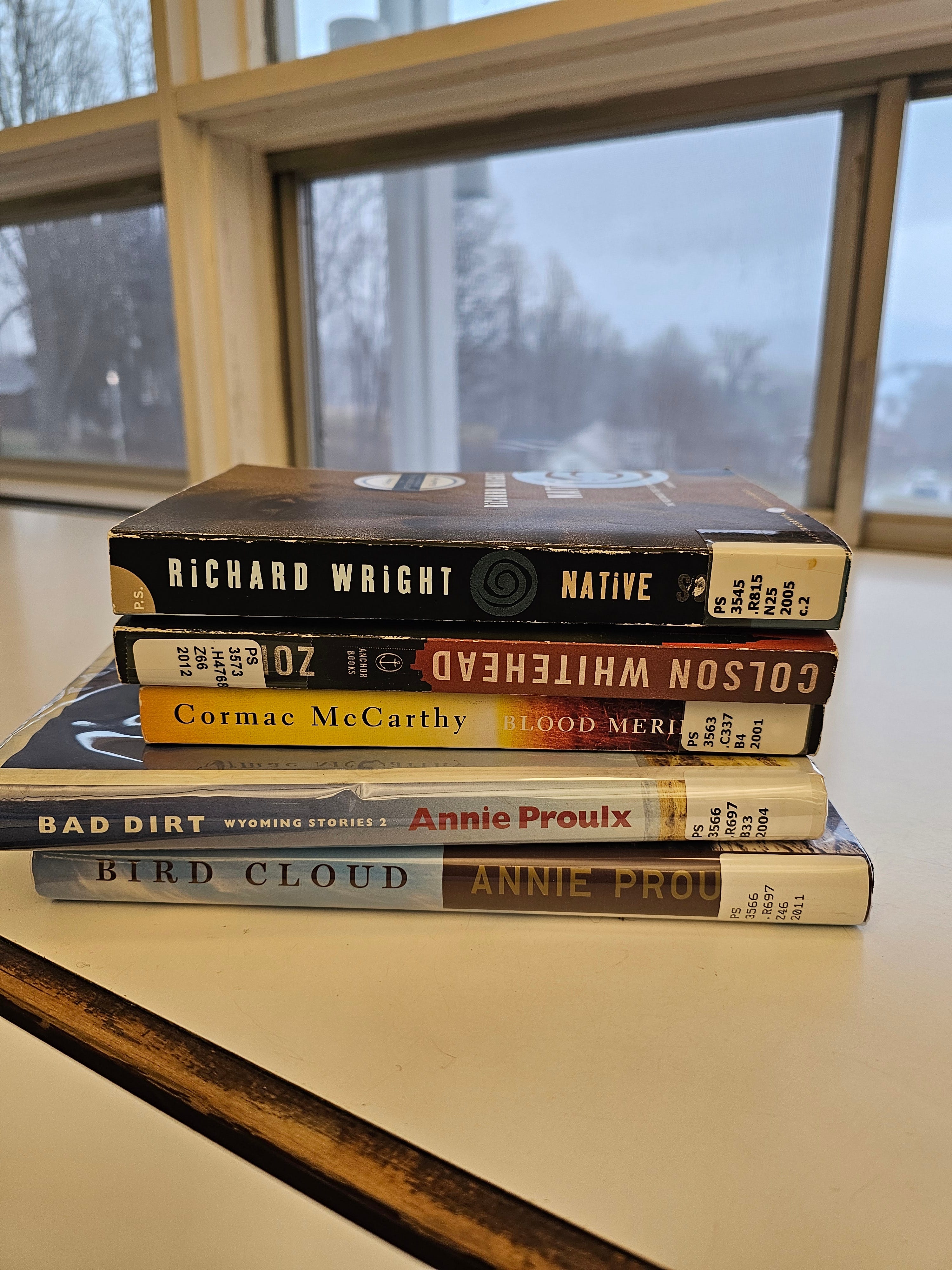
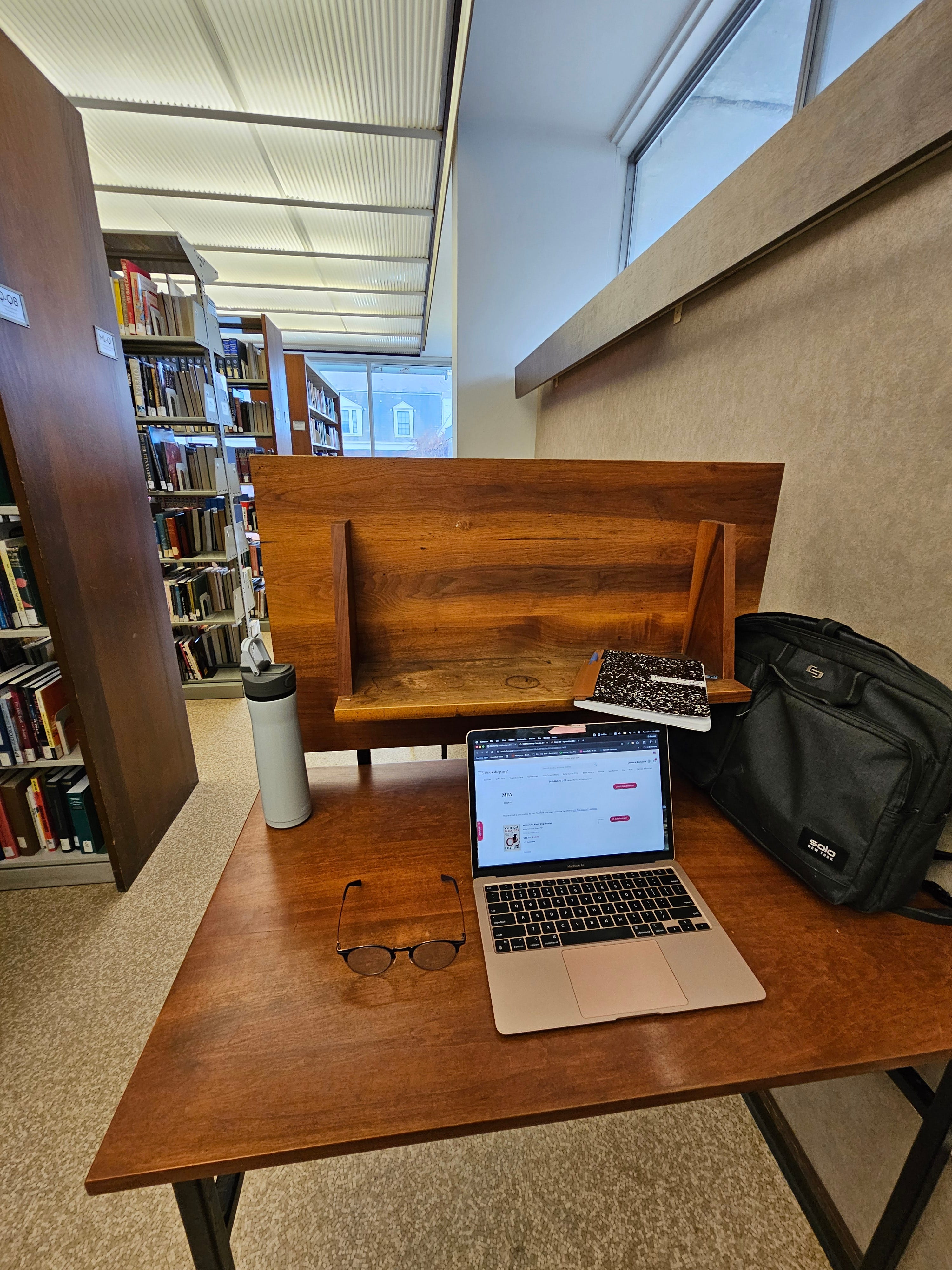
On rare days when I knew my creative well needed to get re-upped, I’d go with friends on a walk, adventure into town, or grab a drink at a cafe or bar. One day me and a few other friends went to an old historic cemetery where Robert Frost is buried.
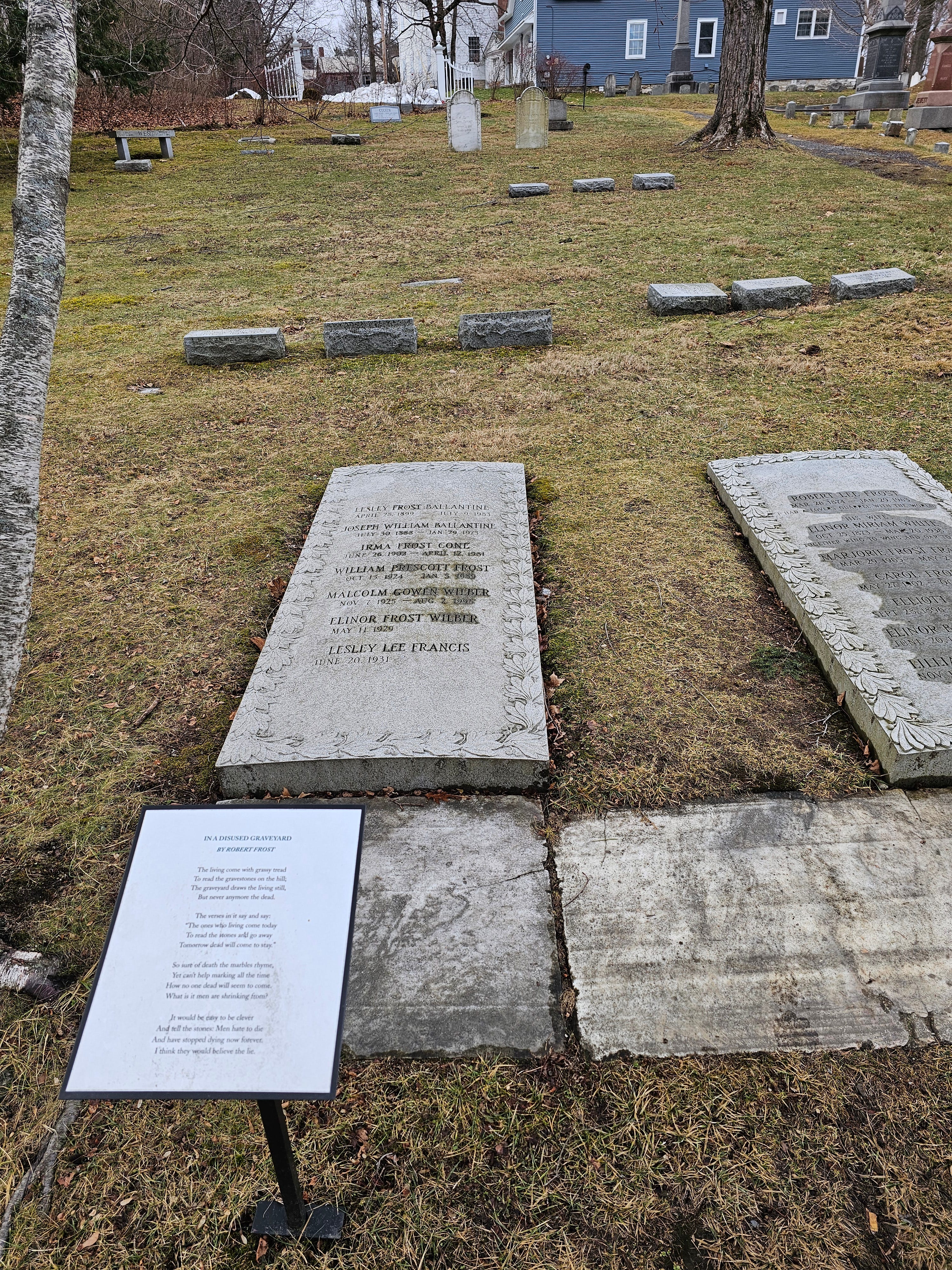
The cemetery was one of the more beautiful ones I’ve been too. It’s on top of a hill with the Green Mountains in the distance. The tombstones were mostly hand carved stone. I saw gravestones I have never seen before. There was one that was a giant stone and one was a mausoleum built into a hill.


The church overlooking the graveyard was one the oldest in the state, too. If not, the oldest!


During the evenings, I set aside time to edit my work of the day and prepare for the next day of writing. I’d often do this while watching some show or movie that inspired me and my project. I watched Susperia, Breaking Bad, and The Devil All the Time. So I was in a drug, religion, and magic headspace.
If I finished up with editing work early, I’d spend the evening watching a reading and or hanging out with friends. One evening, a fellow cohort member set up a party in a secret room where we played beer pong, danced, talked, and had a little party for the cohort. We also did cohort readings in the lecture hall and in a common room building with a fire.
We’ve been doing cohort readings since the beginning. It’s been amazing to be able to hear how people in my cohort have been developing over the terms and enhancing their craft.
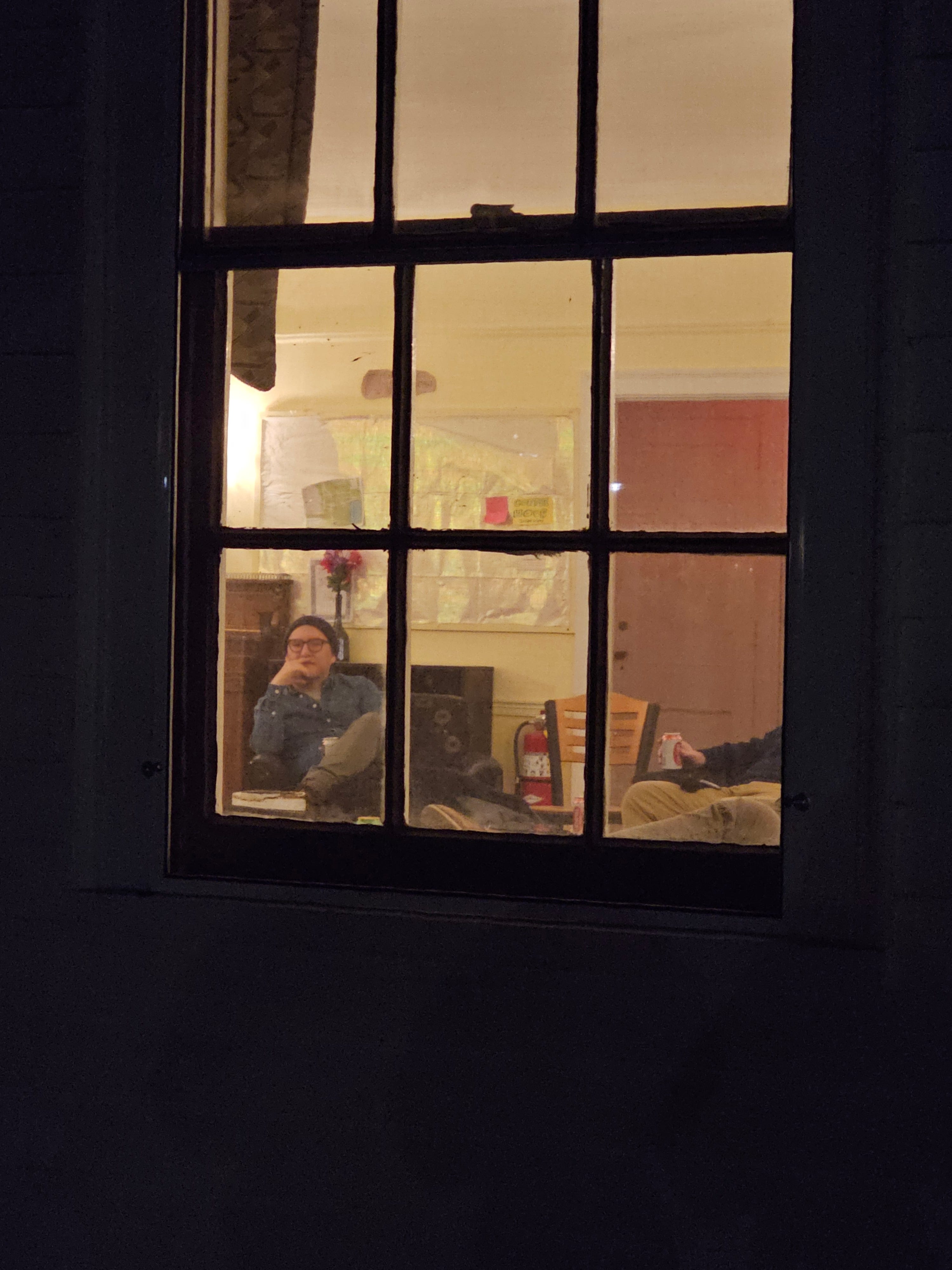
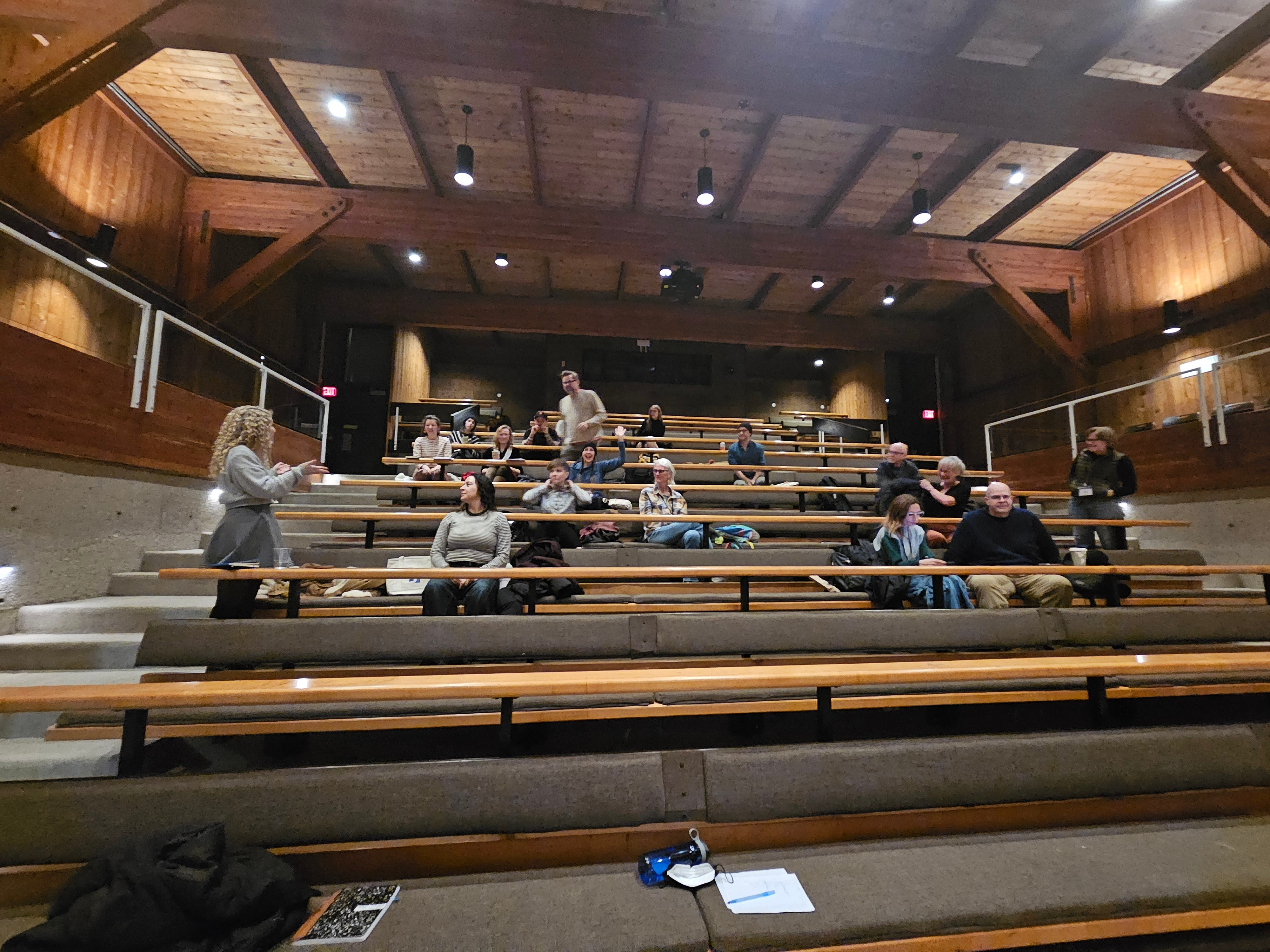
There was even one night of tired bar hopping that turned into jublient karaoke singing. I sang TATU’s ‘All The Things She Said.’ And then I learned that it’s having a moment or had a moment because of Heated Rivalry. Haven’t seen the show. I just love the song and think it’s a great karaoke jam.


Writing, reading, editing, and partying wasn’t all I did on campus, I also went to a few classes and my workshops. All the classes I went to happened to revolve around perspective and structure, particularly repetition. My novel has a unique structure and I’m attempting to write very strong deep voices and a story that sprouts from character and feels almost too wild to be real but too real to not be true.
A lecture that helped me and rocked many of us on campus was one delivered by Moriel Rothman-Zecher called ‘Writing the Ineffable Through the Specific of Our Bodies’.
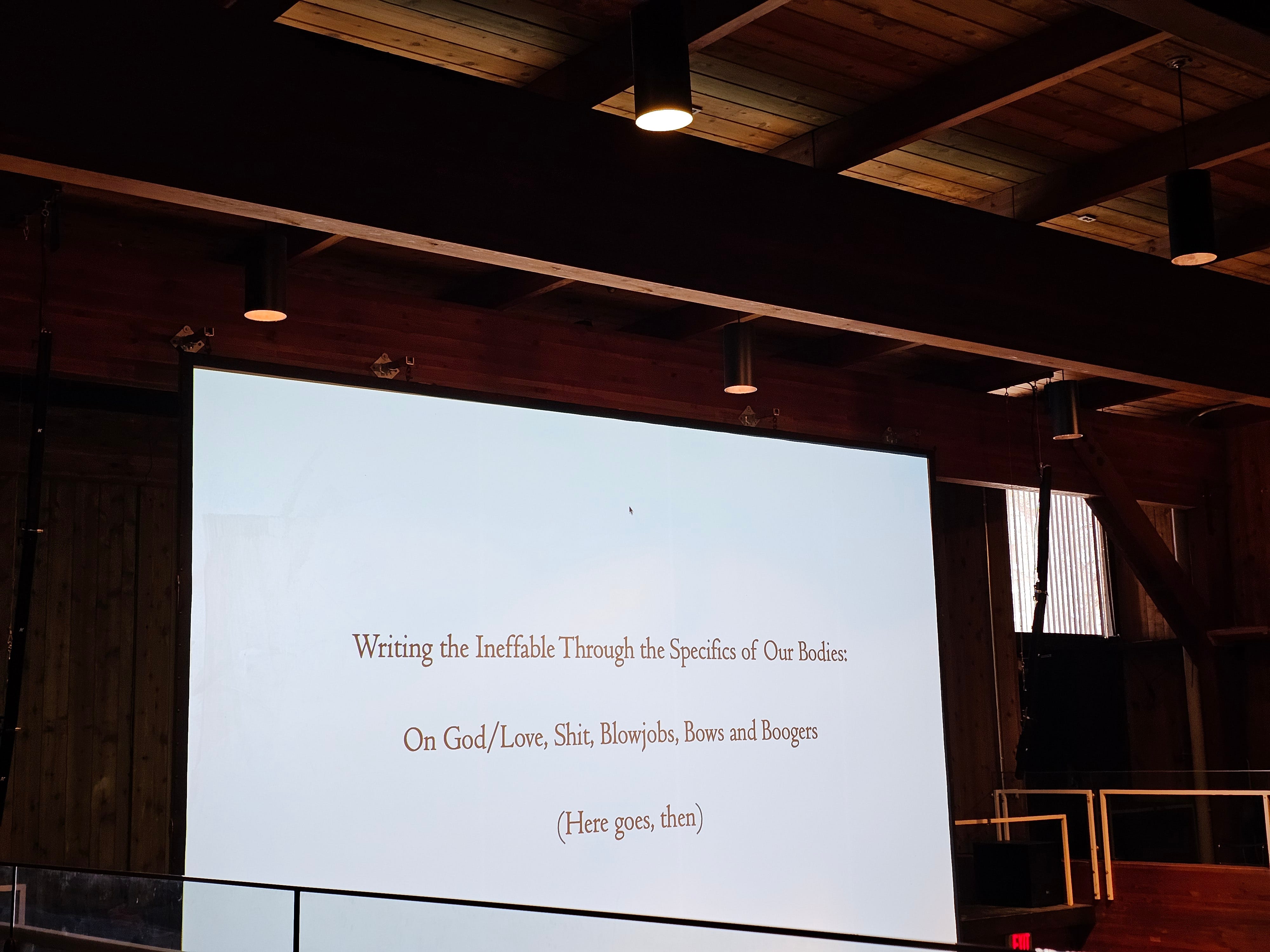
The lecture was my favorite one so far on campus. It was about bodies and spirituality and holiness and yes also shit and blowjob and boogers. There was also a group sing of Hallelujah by Jeff Buckley. It was a beautiful lecture, an emotional experience, and an inspiring speech.
If I could somehow dare to distill the lecture down to a craft technique or advice, it would be: write all human acts that are often viewed as perverse, dark, or repulsive as sacred and a blessing because we all our lives are miracles.
At the end of the 10 long exhausting days, I had learned a lot, wrote a lot, talked even more, and edited work that I was proud of. For my workshop where students in the program share work and get critiqued in a classroom setting on the work, I shared the opening pages to one of the POVs of my novel. They were a set of pages that I found to be very rough and not at all what I was hoping to write for that character.
Typically, in this situation, I would submit something to the workshop that was more polished. Something I had a firm hold on, but since this is my last workshop before graduating, I decided to do something different. I submitted this rough piece for critique. I believed that I knew what was wrong with it and what people would say about it.
None of what I believed was true. The piece was well received and moments that for me rang false to the character created clear images of her in readers’ minds. The writing was praised as being skilled and that it made readers trust me as an author. There were critiques, of course, on whether or not I was telling information to the reader at the right time or allowing the character to slow down and explain things.
But for the most part, the piece sat well with the class!
Later when talking with another cohort member and someone in my workshop, I told her about my feelings about the section I shared. She told me to trust myself and not what other people say. I know my characters and story, so if something seems off to me, then it probably is. When I met with my teacher for the term, Emily Nemens, and talked with her about who my character is and how I think where I started her story is not the right area, she agreed.
All of this feedback came at a great time as I finished writing one POV of the novel and started writing the next. Instead of making me write fast, however, it made me write more deliberate and thoughtful. My aim was 25,000 words, and I wrote less than 15,000 words, but the words I wrote felt good and right. It felt like my characters were speaking to me the way I wanted them to, the way I need them to in order to build and tell this story.
My residency focus was a success. If not in word count, than in building a good relationship with my story and characters.
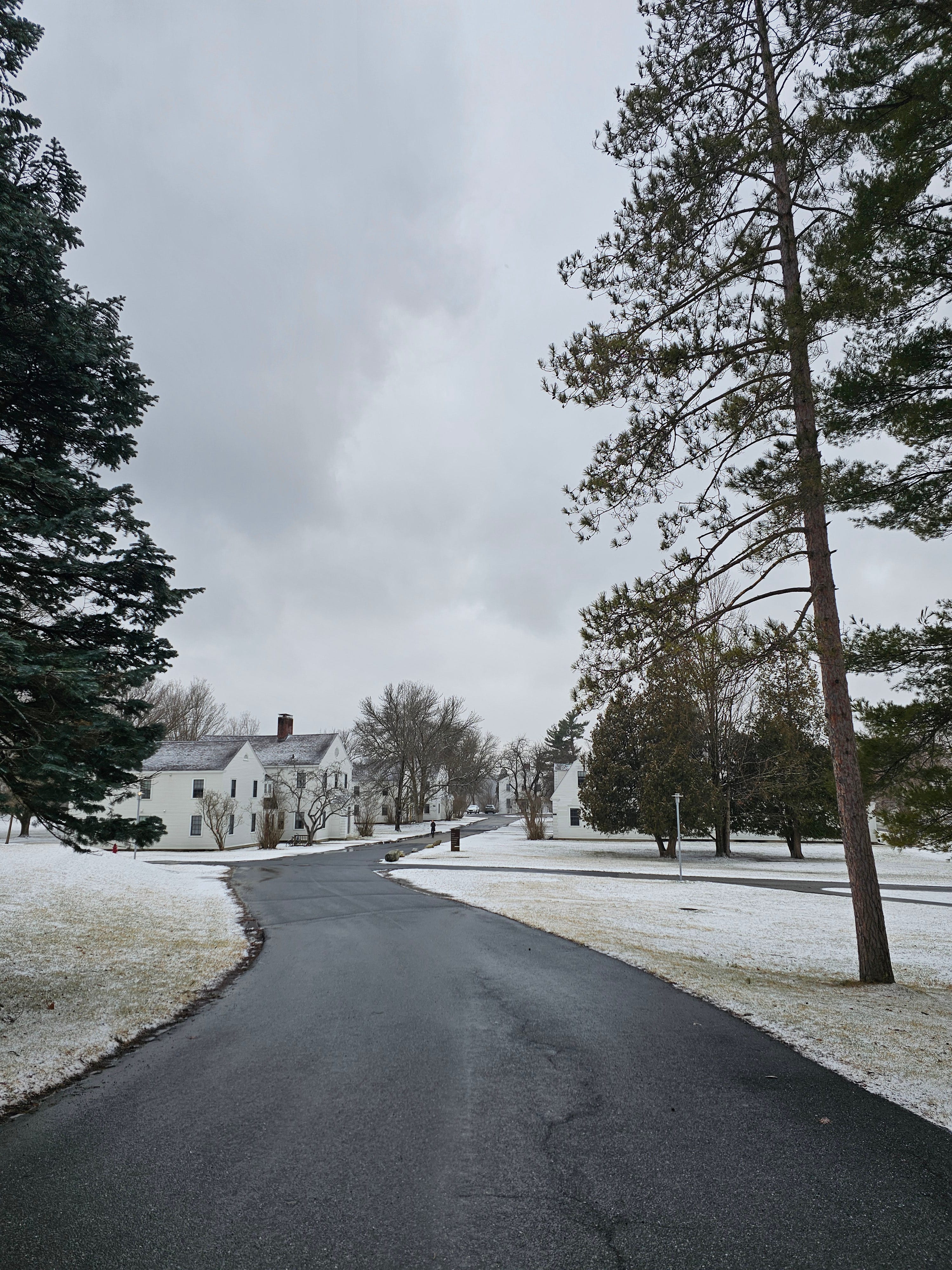
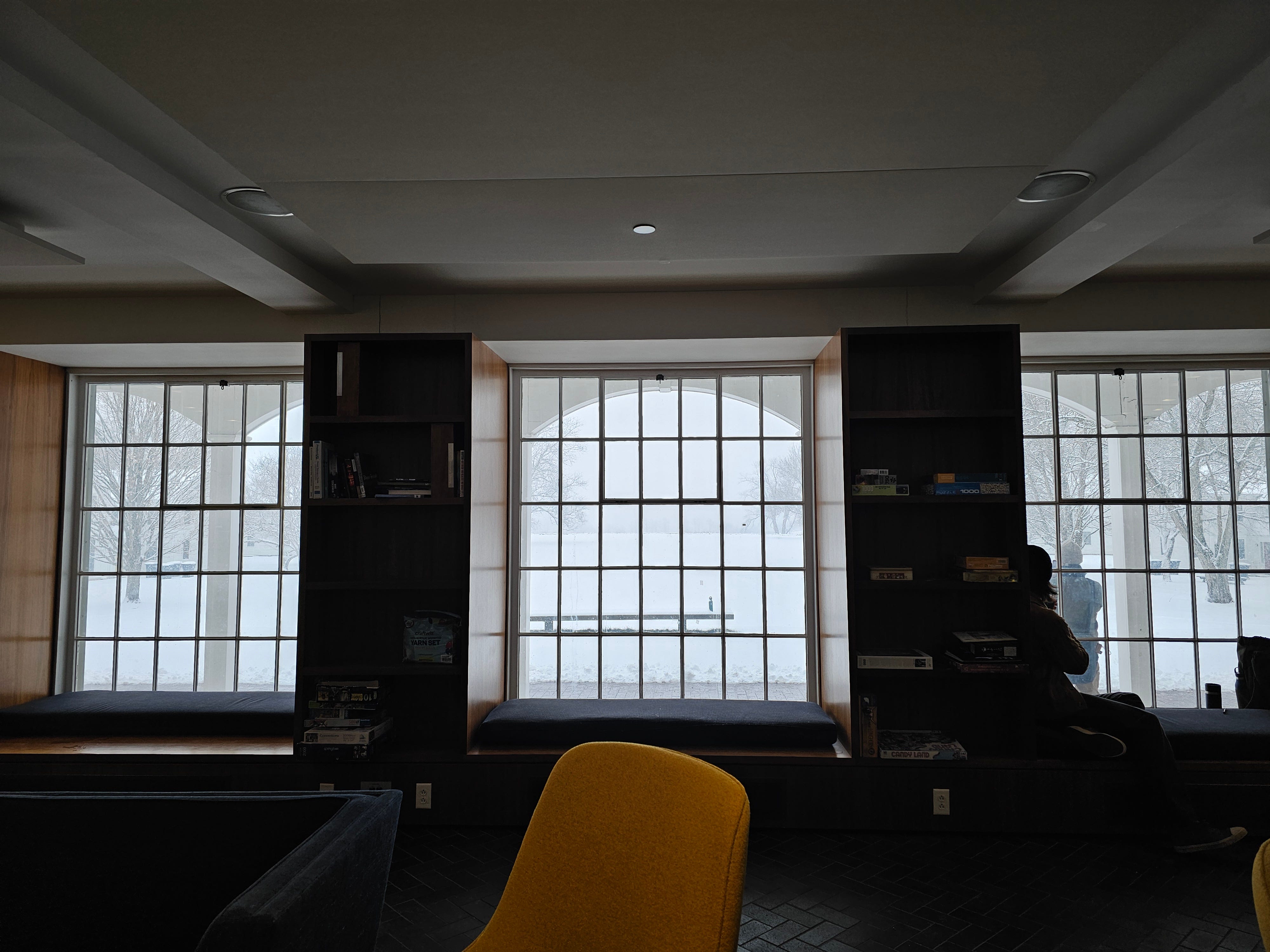
As the days came to an end, a snow storm blew in. This has been a pretty typical experience of Bennington around this time of year. For the past several winter residencies, snow storms have blown in either at the beginning or end or both.
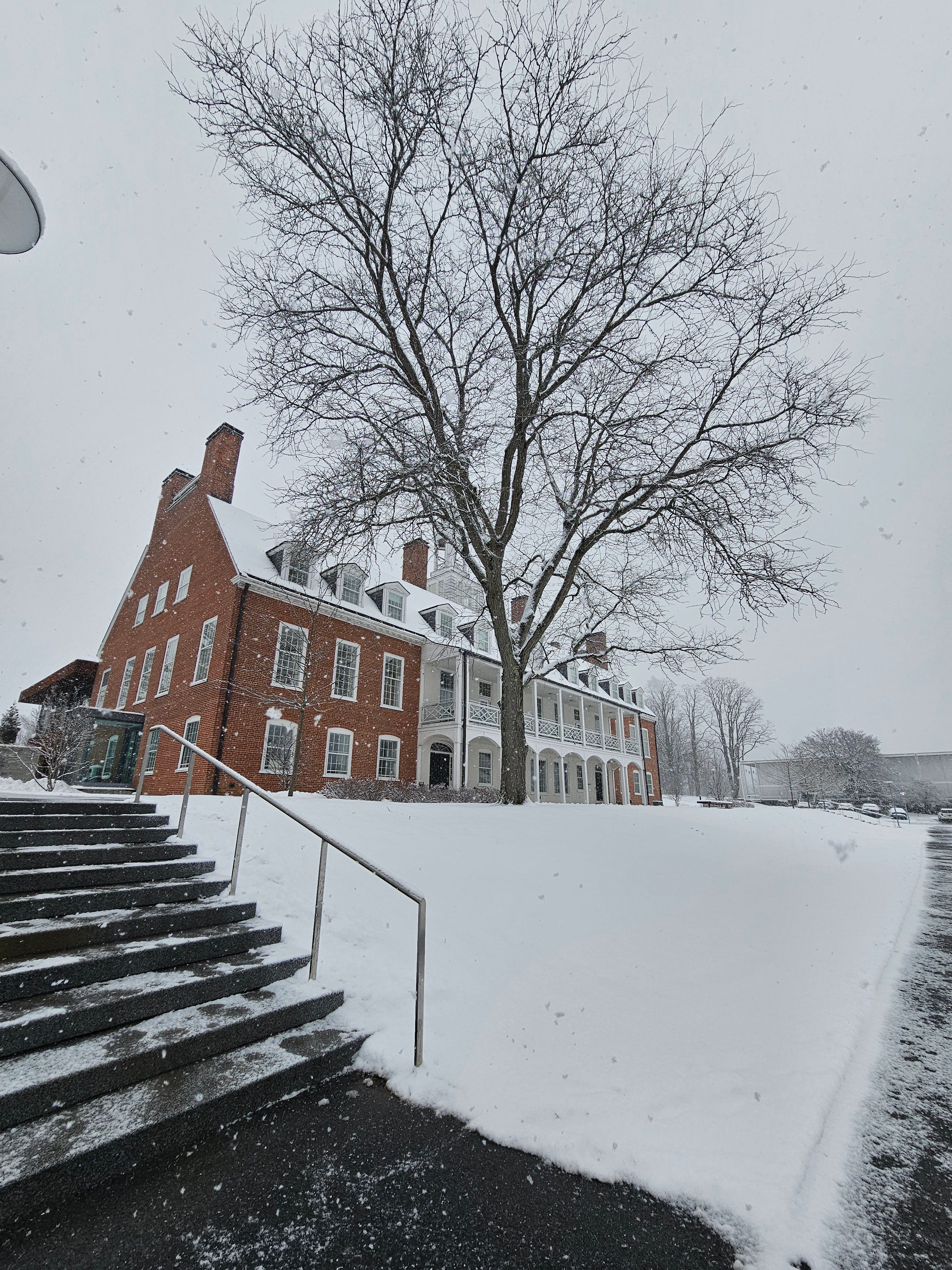


While the snow in Bennington is beautiful and dreamy—there were a couple of writing by the fire while the snow fell sessions—it did cause a bit of an anxiety to rise among many people as we packed up to leave. Last winter, I flew out of Albany that is just a couple of hours away from Bennington and had a long delayed flight that turned out to be the last one before the airport shut down to all incoming and out going flights.
Since I was flying from Philly, I had to make the drive back down from Vermont to Pennsylvania. The roads looked worse than they were and we were able to make it back to Philly with enough time to spare for me to grab a Philly cheesestake before my flight back home.
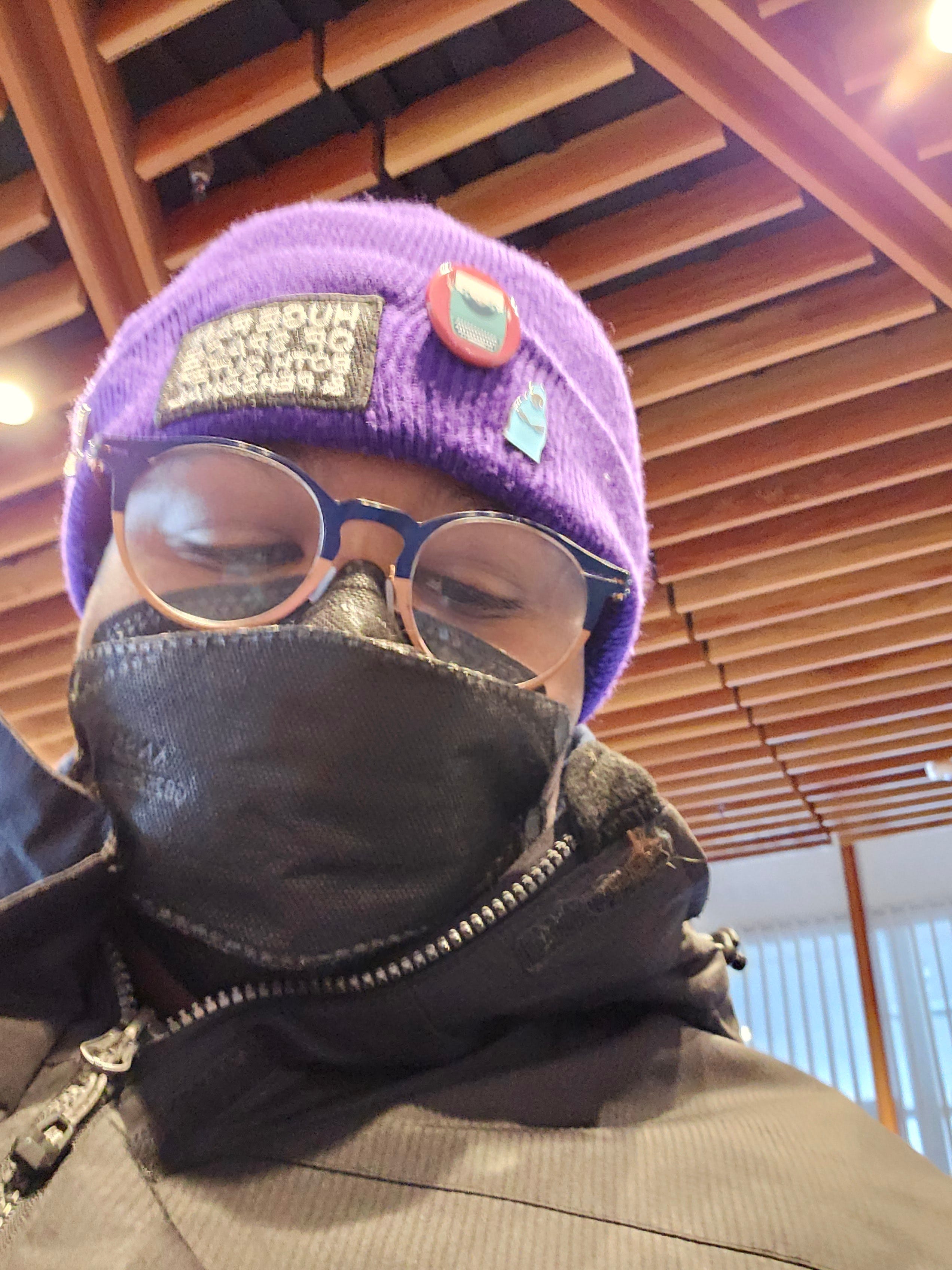
Flying gives me a lot of anxiety, but I was soaring on anxiety meds, cheesestakes, and the post-residency high. In that airport watching the snow drizzle come down while they loaded the plane, I could see how I wanted my last term to go. I sketched out a few intentions in my notebook that amount to this guiding idea:
Do the work that leads to the opportunities that’ll build on the work you’ve done at Bennington.
Yeah, this is my thesis term and I should be focusing on that, but that work falls into this intention. I have to finish writing my novel that is going to be my thesis in order to submit out next year to agents. But I also want to use my degree to start looking at landing a writing teaching job somewhere, submitting out my short story collection, and breaking into more creative nonfiction criticism.
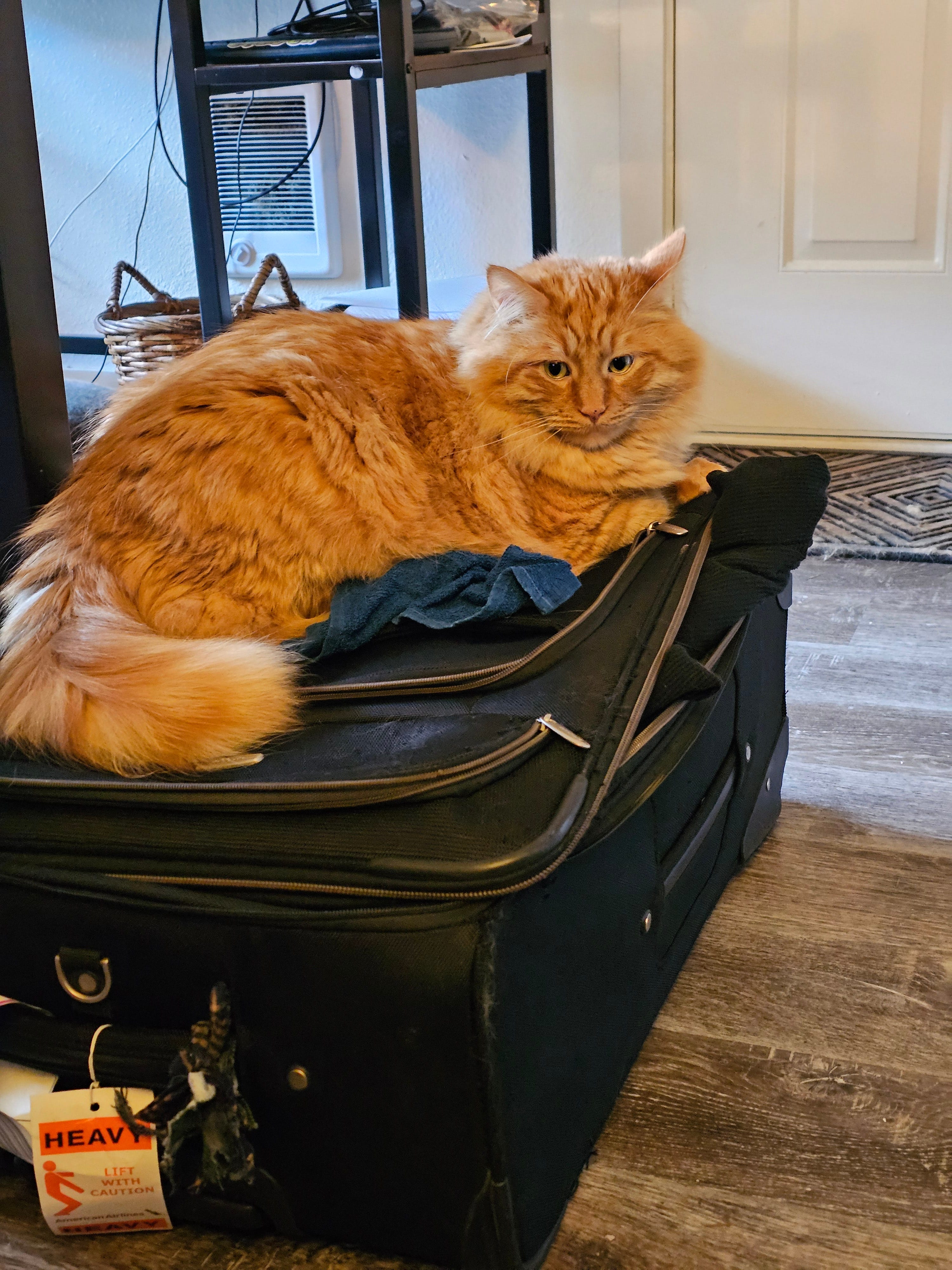
I loved all my time at residency, but coming home after days away and sleeping in an old colonial dorm room felt so good. It took my cat about a day to realize that I was real and actually home. Once he did, he stayed close to my side for days after.
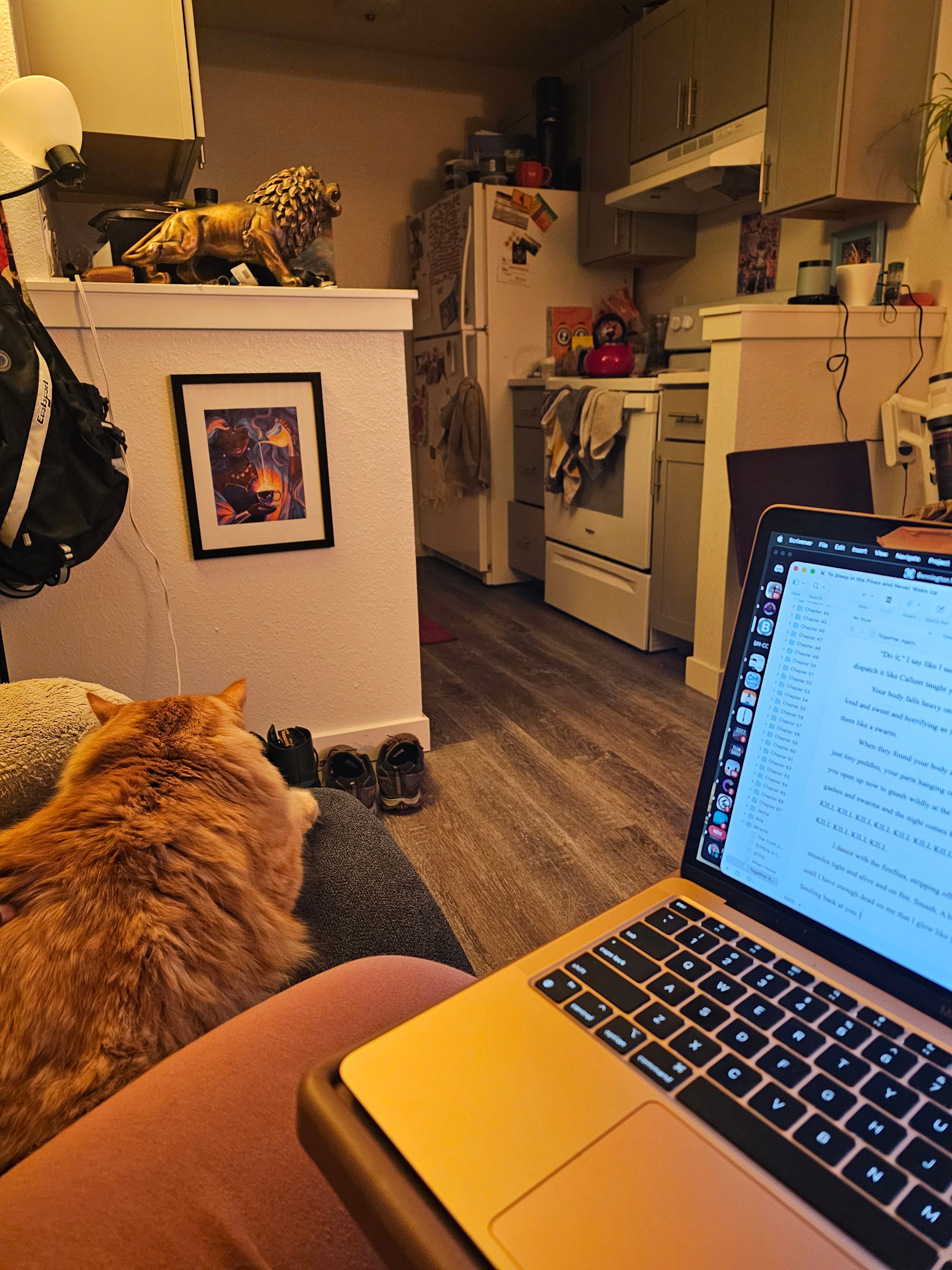
He will always be my favorite writing buddy.
There is one more residency I have left. My graduation residency! I’ll do what I have been doing for that one and take pictures to chart my experience for those who want to see my experience from afar. I’ll try to be better and more intentional about snapping pictures while on campus but I get so caught up, I often forget about my phone.
If you haven’t read about my previous residencies, here are the photo essays for each: 1st residency road trip, 2nd residency, and 3rd residency. I’ve also been writing more detailed reports of my MFA experience over on my author website: Bennington Writing Seminars Residency Experience, My First MFA Year, and First Half of My Thesis Year.